Category Archives: choquequirao trip

Best Time to Visit Machu Picchu

Considering a bucket list trip to Machu Picchu but unsure of when to go? You’re not alone. With Peru’s location in the Southern Hemisphere, high altitude and abundance of mountains, the country has anything but your standard four seasons. Top this with rainy and dry months, peak tourist dates, Peru travel restrictions and limited permits to hike the Inca trail, and you have a brainbuster of a puzzle deciding when the best time to visit Machu Picchu is. No need to stress; the local experts are here to help.

The best time to visit Machu Picchu is the months of May and October. On either side of the main tourist season of June through August, you’ll have quieter trails, yet the weather is ideal for trekking the Inca Trail with plenty of clear, beautiful days.

Once you have your dates chosen, the next step is the tricky process of securing your tickets to visit Machu Picchu and hike the Inca Trail. Or, if you prefer to leave the planning to the experts, grab your spot on a Machu Picchu Tour and let two excellent guides take care of every last detail for you.
First things first, you’re probably curious if Machu Picchu is open to visitors. The answer is a big yes – Machu Picchu is open and ready to be explored! Like many other monuments around the world, Machu Picchu was closed to visitors in March of 2020. However, it is now back open with new safety protocols and a more limited capacity. As tickets sell out faster now, it’s recommended to book your visit a few months in advance or join a tour group that has availability.
Machu Picchu Weather
Overall, Machu Picchu has very pleasant weather. Warm days and cool evenings all year round make it an ideal location for hiking, and Machu Picchu rarely sees freezing or scorching temperatures.

Machu Picchu Temperatures

Located at 2440 metres (8000 feet), you may be surprised to learn that Machu Picchu’s temperatures are relatively mild all year round. Temperatures stick between 50 to 80 degrees Fahrenheit (10 to 27 degrees Celcius) year-round on average, with only a few degrees difference between mid-summer and mid-winter. With Machu Picchu’s high altitude, you can expect the weather to change unexpectedly, so always be prepared for both rain and sun.

Machu Picchu Rainy Season

For many, the rainy season is not the ideal time to visit Machu Picchu. Between December and February, you’re much more likely to experience periods of heavy rainfall, which can cause the trail to be muddy and slippery. However, with the proper gear and an adventurous spirit, you can experience Machu Picchu in solitude.
What is the best month to Visit Machu Picchu?
If you don’t mind the crowds and prefer all day sun, August is your go-to. Whereas if you’d like to stay well clear of the crowds and don’t mind a bit of humidity, May and October are ideal months. Each month brings its own characteristics and benefits to visit Machu Picchu. We go into more detail below.

Machu Picchu in January

January is the rainiest month of the year; you always have good rain gear when visiting Machu Picchu. If you are traveling this month, you need to be prepared for itinerary changes, trail closures due to landslides, train delays, and flight cancellations.

The temperatures in Machu Picchu will vary from highs around 71°F (21°C) and lows around 45°F (7°C). This month is good for those travelers who would like to visit Machu Picchu in solitude and get good deals in hotels, flights, and tours.

Machu Picchu and Inca Trail tours are available every day; we recommend avoiding Salkantay Trek, Choquequirao Trek. If you are hiking to Machu Picchu, the best tour for this month is the Lares Trek.

Machu Picchu in February

February is the heart of the rainy season; even though si expected fewer rainy days than January, February is expected to have heavy rains. The number of visitors to Machu Picchu reachest the lowest point during this month.

The temperatures in Machu Picchu will vary from highs around 72°F (22°C) and lows around 46°F (8°C). Travelers must be prepared for rain, schedule changes due to landslides, or bad weather.

February is one of the worst months of the year to visit Machu Picchu. Most of the trails like Inca Trails, Salkantay Treks, Choquequirao treks will be closed. If you plan a hiking trip, we recommend the Lares Trek to Machu Picchu.

Machu Picchu in March

During March, the weather starts improving with more sunny days and fewer hours of rain every day. The second half of the month is the preferred time for travelers.

The temperatures in Machu Picchu will vary from highs around 71°F (21°C) and lows around 42°F (6°C). Most trekking tours will be open again after February, including the Inca Trails.

We recommend avoiding tours like Salkantay Treks as there are located in the Amazon area and rains are still weighty.

Machu Picchu in April

April starts with more travelers arriving in Machu Picchu, the shoulder season starts with great weather, few rainy days, and travelers will see the sunrise more often in Machu Picchu.

The temperatures in Machu Picchu will vary from highs around 73°F (22°C) and lows around 39°F (4°C).

This is the perfect time to take a hiking tour to Machu Picchu and travel by train. Tours will sell out fast, and you need to book in advance.

Machu Picchu in May

The dry season starts; however, you must be still be prepared for rainy days. May is usually busy in the Inca Trail, Machu Picchu, and all hiking tours. The weathering May makes it perfect for visitors with a clear sky and amazing views of the mountains.

The temperatures in Machu Picchu will vary from highs around 86°F (30°C) and lows around 42°F (6°C).

May is arguably one of the best months to visit Machu Picchu, hike the Inca Trail, Salkantay trek, Lares trek, and other alternative hikes.

Machu Picchu in June

June starts the high season for tourism in Peru; thousands of travelers will arrive in Peru, especially from the northern hemisphere, where they have summer vacations. Little rains are expected during these months.

The temperatures in Machu Picchu will vary from highs around 83°F (28°C) and lows around 44°F (7°C).

Most tours like the Inca Trail, Salkantay, Lares trek will be crowded; you need to book in advance.

Machu Picchu in July

July is the heart of the dry season and also the winter season in Peru. Due to its location of Machu Picchu, the temperature will not have many variations; however, in the mountains, the temperature will drop below freezing, especially at night and early morning.

The temperatures in Machu Picchu will vary from highs around 82°F (27°C) and lows around 44°F (7°C).

During this month, there are long lines to get the buses, trains to enter Machu Picchu. You must book hotels, tours far in advance.

Machu Picchu in August

Historically, August is the month when we get the most number of visitors. You must be prepared to see many visitors in every place you visit and wait in line to board the buses and enter Machu Picchu.

The temperatures in Machu Picchu will vary from highs around 78°F (26°C) and lows around 42°F (6°C). All trails are available; we recommend alternative treks.

Machu Picchu in September

The rains are back in September, and the dry season will end; the cold winter is also replaced by cooler weather in the mountains.

The temperatures in Machu Picchu will vary from highs around 73°F (22°C) and lows around 44°F (7°C). All trails are available; we recommend alternative treks.

With the drop in the number of visitors to Peru, Machu Picchu’s long lines are over and make it perfect for hiking in the mountains.

Machu Picchu in October

October is one of the best months to visit Machu Picchu, as the transition months between the dry season and wet season, little rains are expected, and we’re away from the cold weather from the winter season.

The temperatures in Machu Picchu will vary from highs around 72°F (22°C) and lows around 41°F (5°C). The perfect month to travel to Machu Picchu as we have a lot of availability and fewer visitors.

Machu Picchu in November

November starts the rainy season officially; however, we will have weeks of sun and nice weather.

The temperatures in Machu Picchu will vary from highs around 78°F (25°C) and lows around 45°F (7°C). The number of visitors to Machu Picchu will continue decreasing, and the hiking tours will have fewer visitors.

Machu Picchu in December

The rains will occur more often; however, the number of travelers will increase in the last weeks for the end-year holidays.

The temperatures in Machu Picchu will vary from highs around 71°F (21°C) and lows around 44°F (6°C). This is one of the last months to have good weather before entering the heavy rainy season.

Best time to hike the Inca Trail
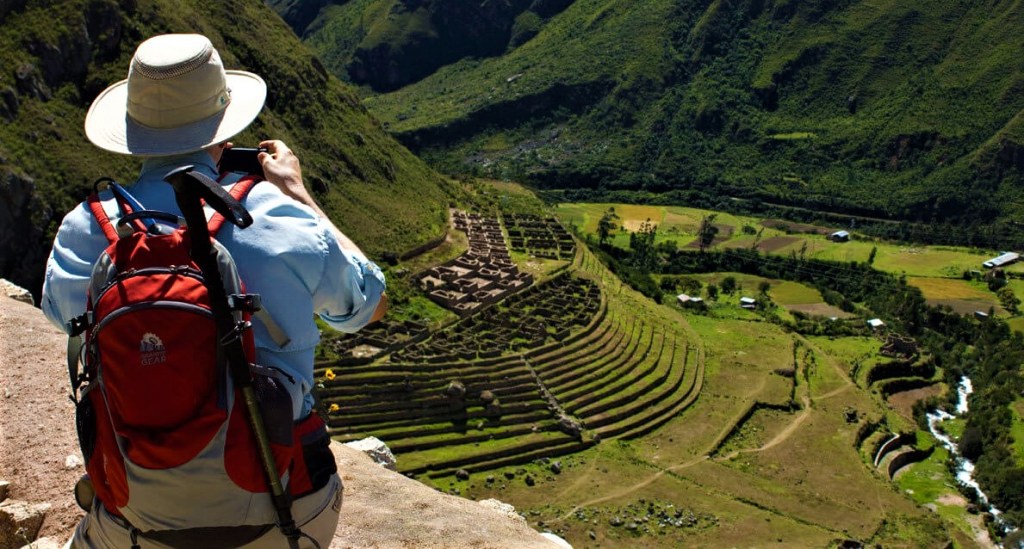

Similar to Machu Picchu, hiking the Inca Trail is best just outside the busy dry season. The temperatures in October are ideal for hiking, ranging from 22˚C (72˚F) during the day to 12˚C (54˚F) at night. May is another great time to hike the Inca Trail, with similar temperatures and quiet trails. Even so, if you don’t mind the crowds and want nearly guaranteed sunny days, July and August will be superb. Just be sure to book your Inca Trail hike to Machu Picchu in advance as permits sell out quick!

Inca Trail weather

While the Inca trail has distinct wet and dry seasons, you always want to be prepared for any weather. The months of June, July and August provide plenty of beautiful blue sky days, but you’ll want rain gear just in case. You’ll also want plenty of layers, as temperatures can start chilly in the morning, and by the afternoon, you’ll be hiking in shorts and a t-shirt.

When is the Inca Trail Closed?

The Classic Inca Trail is closed each year for the month of February. The wet season is at its peak between January and March, so with fewer hikers about, it’s a great time to keep the trail in world-class condition. During these months, you can still hike the Lares Inca Trail on your journey to Machu Picchu.

Best Time of day to Visit Machu Picchu

You can visit Machu Picchu between its opening time at 6 am and its closing time at 5:30 pm daily. For the best experience, try and visit either first thing in the morning or after 3 pm. By arriving right at 6 am, you’ll be able to watch the sunrise and beat the mid-morning and afternoon crowds. If you prefer more of a sleep in, after 3 pm is another great time. The majority of the crowds have already left, and depending on the time of year, you’ll get to watch the very much underrated sunset.

Planning a trip to Machu Picchu
If you are thinking of organising a Machu Picchu trip yourself, it is a good idea to book well in advance, say at least a couple of months out if you want to go during the busy season. Due to the sheer number of different historical and cultural places on offer in Peru, unless you are travelling with a local guide or someone who knows all of the local legends and off the beaten track hidden treasures, it’s well worth doing your homework before setting off for Peru. Here is a list of things to do in Machu Picchu you should consider!

When is Machu Picchu the Most Crowded?

In the main season of June through August, you can assume every day will be busy at Machu Picchu. Outside of the dry season, other dates also see an influx of travellers, students and families. These include:

Thanks giving Holiday – End of November
Christmas Holiday & Winter break – December 23 to mid/late January
Spring Break – One week in March or early April. This is a popular time for students to visit the Americas
Summer Break – Early/mid-May to the day after Labour day in early September
Major federal and state holidays – Religious holidays also need to be considered
Peru Independence Day (July 28 – 28), a very popular time for Peruvians to visit Machu Picchu
Availability of Machu Picchu Tickets

To ensure every visitor can experience Machu Picchu’s magic, without hoards of people, the Peruvian government controls the number of people allowed to visit each day and how long visitors can stay and where they can explore. These controls also ensure Machu Picchu is preserved as a World Heritage Site and generations to come can appreciate its beauty.

As prices and number of visitors have been changing due to the COVID-19 pandemic, please refer for the most up-to-date information. Or, if you prefer to leave the planning to local experts, join an all-inclusive Inca Trail and Machu Picchu tour.
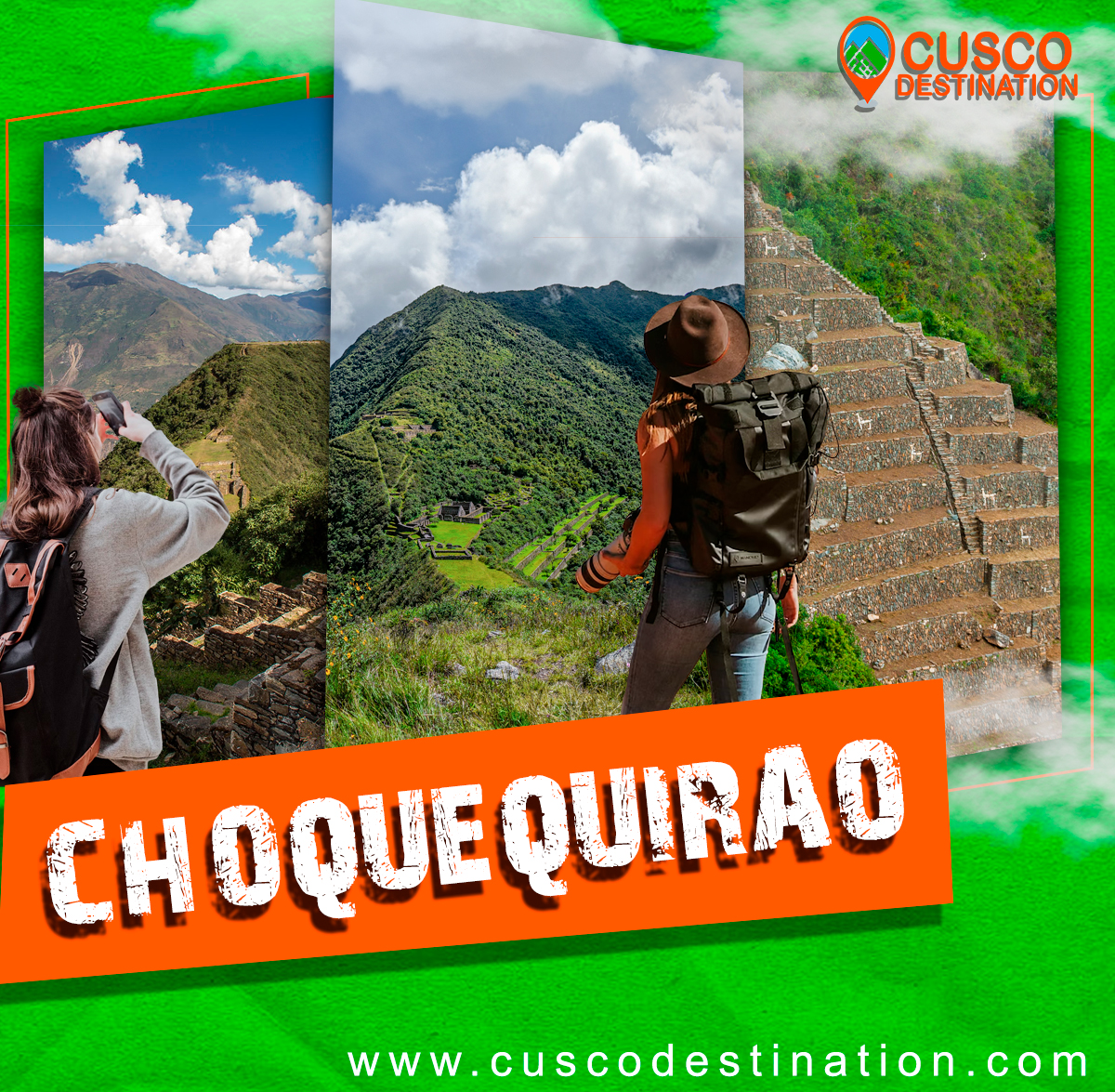
CHOQUEQUIRAO TREK

👉👉👉🦙🗻🏕⛺ 𝘾𝙃𝙊𝙌𝙐𝙀𝙌𝙐𝙄𝙍𝘼𝙊 𝙏𝙍𝙀𝙆👈👈👈👈

📲 INFORMES Y RESERVACIONES:

Tenemos salidas programadas de:

✅ 𝘾𝙃𝙊𝙌𝙐𝙀𝙌𝙐𝙄𝙍𝘼𝙊 𝙏𝙍𝙀𝙆 𝐓𝐑𝐄𝐊 𝟑 𝐃𝐈𝐀𝐒 🗻👈👈👈

✅ 𝘾𝙃𝙊𝙌𝙐𝙀𝙌𝙐𝙄𝙍𝘼𝙊 𝙏𝙍𝙀𝙆 𝐓𝐑𝐄𝐊 4 𝐃𝐈𝐀𝐒 🗻👈👈👈

✅𝘾𝙃𝙊𝙌𝙐𝙀𝙌𝙐𝙄𝙍𝘼𝙊 𝙏𝙍𝙀𝙆 𝐓𝐑𝐄𝐊 5 𝐃𝐈𝐀𝐒 🗻👈👈👈

⛺ VIAJA Y CONOCE EL PERU !!! 🗻

📲 LLAMA O ESCRIBENOS Y HAZ TU RESERVACION:

WhatsApp https://bit.ly/Choquetrip

☎ – 084 650500

📧 info@cuscodestination.com

🌐http://bit.ly/CuscoDestination

SOMOS “CUSCO DESTINATION Travel agency” Operadora de Viajes En Cusco Destination

Choquequirao, basic information – CHOQUEQUIRAO TREK TO MACHU PICCHU

What does Choquequirao mean?
Choquequirao is a Quechua word that means ‘Cradle of Gold’. The name comes from the nomination of a hill near the archaeological site.

Where it is located?
Choquequirao is located in one of the fringes of the snowy Salkantay, north of the Apurímac River. It is currently located in the Santa Teresa district, La Convencion province, Cusco department, Peru.

How high is it?

Choquequirao is located 3,033 meters above sea level (m.s.n.m.). Due to its location, it is presumed that this Inca site served as a checkpoint between the main Inca sites such as Pisac, Cusco and Machu Picchu.

What’s in Choquequirao?
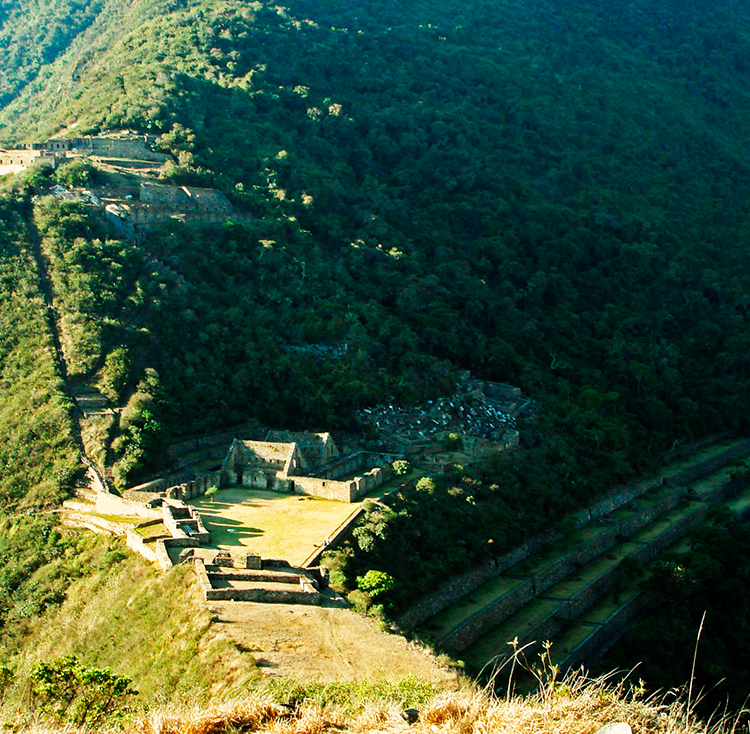
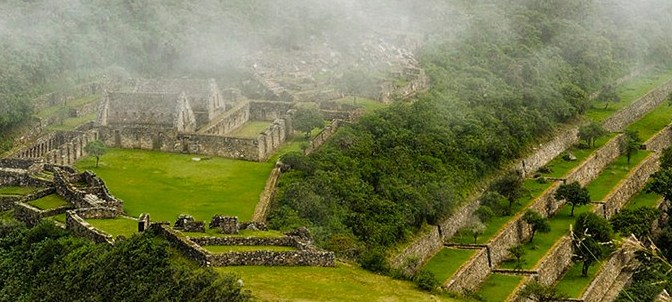
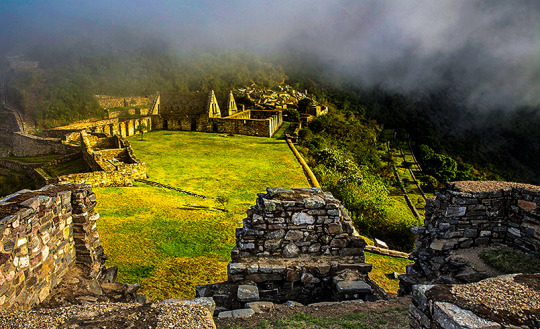
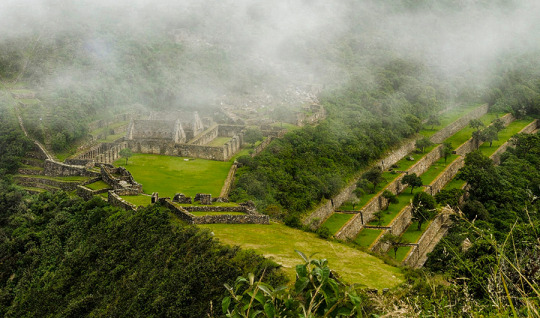
Choquequirao has only been excavated by 30%. Despite this, it already has several very important Inca buildings:

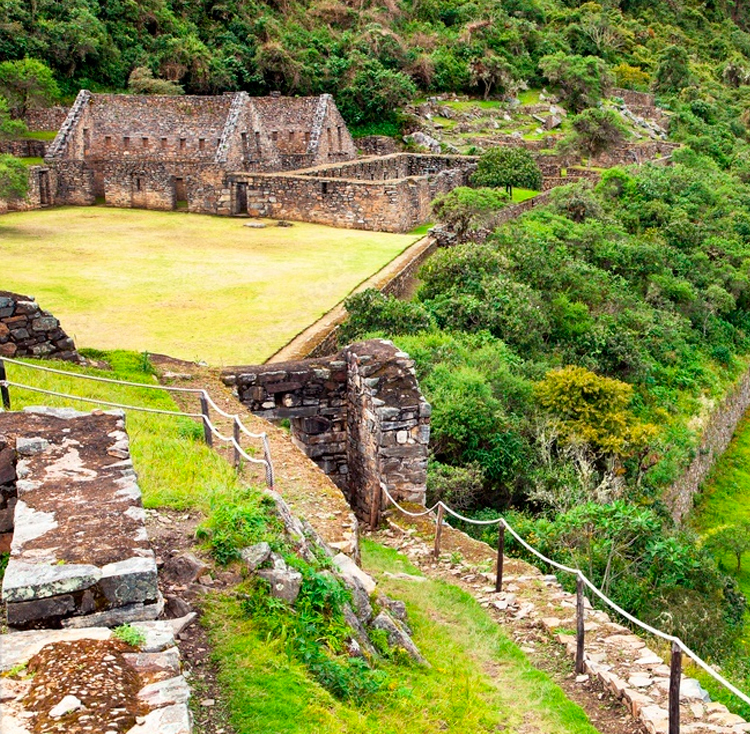
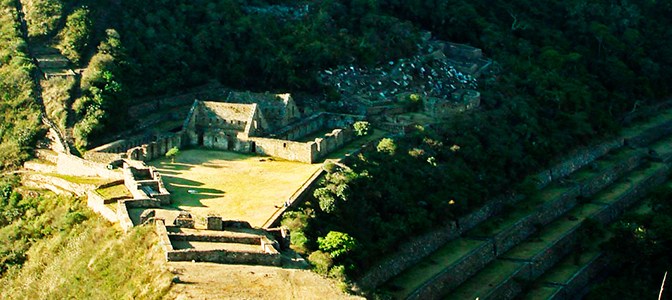
Main square – The main square or Huaqaypata divided the enclosure into two. It is a two-story stone construction. Along with this, there are other buildings connected to each other.
Colcas – Typical constructions of the main Inca centers. In Choquequirao, these platforms have internal subdivisions. The purpose of these warehouses was to store products for food, clothing and others.
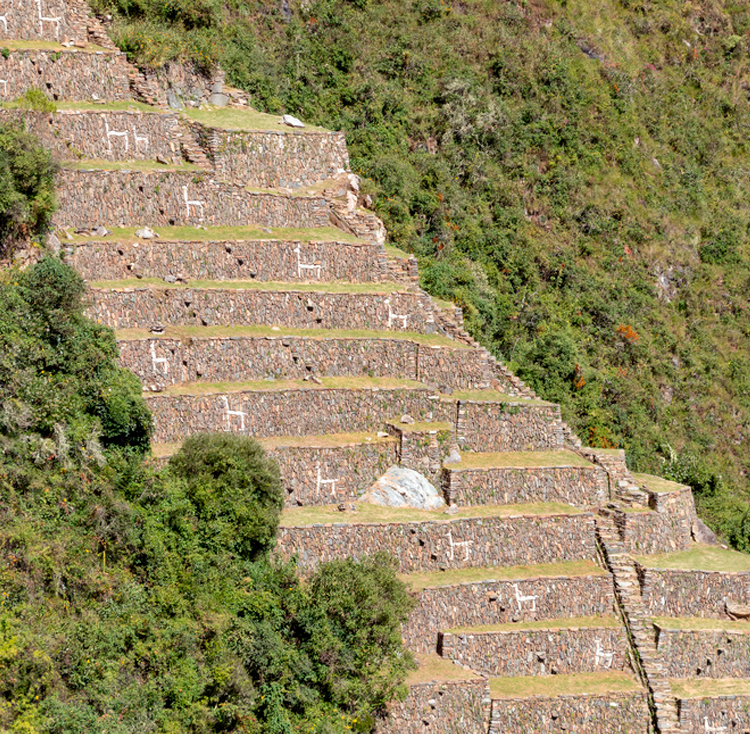
Platforms – Choquequirao has a significant number of platforms for cultivation. In the western sector there are 22 engravings in the form of a flame arranged on 15 platforms. These figures are known as the ‘Flames of the Sun’.
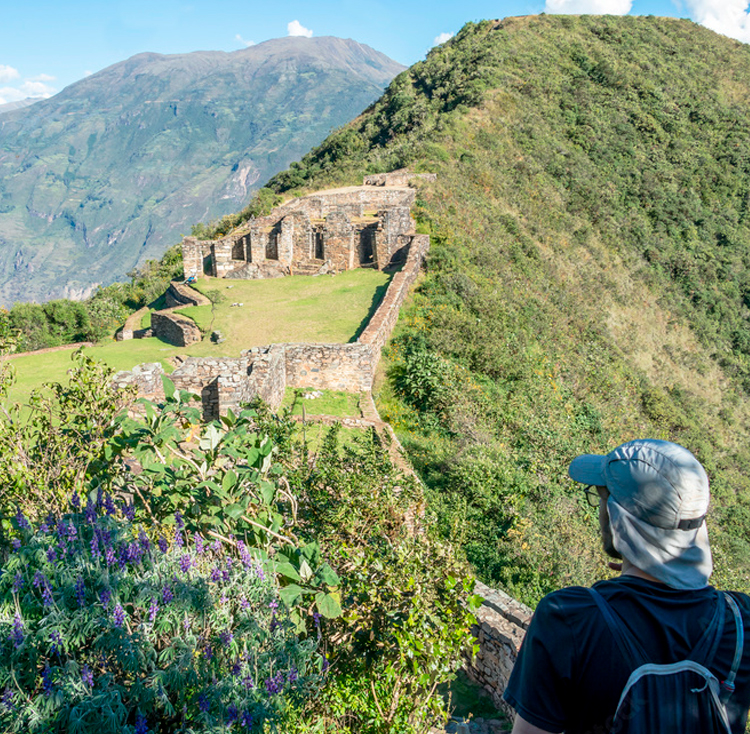
Housing – In the highest part of Choquequirao, there are up to 5 buildings whose purpose was probably housing for the priests of the compound. This Inca site is believed to have been an important ceremonial center.
Inca Cemetery – Also known as the ‘Triumphal Wall’. There were found 17 funeral bundles and a water trough called “The House of the Fall of Water”.
Kallankas – These rectangular buildings had multiple functions such as workshop, administrative center, meeting space, etc. In Choquequirao there are 2 Kallankas on whose walls there were gutters that supplied water.
Ushnu – This oval platform construction sits on top of a hill. Due to the wall that surrounds it and the privileged view of the snow-capped mountains, the river and the entire enclosure; it is believed to have had a religious purpose.

CHOQUEQUIRAO TREK TO MACHU PICCHU 7 DAYS

Day 1: CUSCO – CACHORA – COCAMASANA – PLAYA ROSALINA.

We will pick you up at your hotel in a private bus. We start from Cusco, then we go to the town of Cachora (3100 masl), here we find the carriers and support staff, in Cachora we’ll start our walk, after 2 hours of walking we reach Capuliyoc (2915 m) from there we’ll have a beautiful view of the snowy peaks Padrayoc, Wayna Cachora and the Apurimac valley. Then we’ll descend toward Coca Masana (2330m) where the climate becomes warmer and the flora and fauna begin to change. Finally we reach the Rosalina beach (1550m) located on the bank of the Apurimac River where we will have dinner and spend the night.

– Meals: Lunch, Dinner
– Acomodación: Camp, Playa Rosalina 1550 msnm
– Climate : warm and sunny
– Distance Travelled: Approximately 12km
– Hiking time : 6 hour

Day 2: PLAYA ROSALINA – CHOQUEQUIRAO.

This day is the hardest of the five days, we will get up very early. After breakfast, we begin our trek by a steep road for about 5 hours until we reach Raqaypata where we will have lunch. Throughout the walk we will observe many orchids and wild flowers, many birds. From Raqaypata we’ll walk for about two hours to the archaeological site of Choquequirao and there we will observe the sunset and the flight of the condor. Our campsite will be installed outside the ruins.

– Meals: Breakfast, Lunch, Dinner
– Acomodación: Camp, Choquekiraw 3100 msnm
– Climate : warm and cold at night
– Distance Travelled: Approximately 14km
– Hiking time : 7 hour

Day 3: CHOQUEQUIRAO – PINCHINUYOC

After breakfast. We dedicate this mornig to explore the ruins of Choquequirao, and have a little rest before lunch. In the afternoon we begin our trek by a steep road for about 2 hours until we reach Pinchinuyoc where we will camp for the night. This is definitely the easiest day of the trip

– Meals: Breakfast, Lunch, Dinner
– Acomodación: Camp, Pinchinuyoc 2100msnm.
– Climate : warm, windy and cold at night
– Distance Travelled: Approximately 12km
– Hiking time : 8 hour

Day 4: PINCHINUYOC – RIO BLANCO – MAIZAL.

After breakfast, we will hike down hill for 2 hours and arrive at the canyon of the Rio Blanco (1990 m / 6527 feet), where you can dip your feet in the cool waters. where we have a rest before starting a difficult climb to our campsite of Maizal (2100 m / 6889 f.) The climb is 3- 4 hours long. Este es probablemente el día más difícil del viaje, pero si se ha preparado bien y está decidido, tendrá éxito. Y la cerveza fría a su llegada sabrá aún mejor.

– Meals: Breakfast, Lunch, Dinner
– Climate : warm and hummed
– Acomodación: Camp, Maizal 2100 msnm.
– Distance Travelled: Approximately 17km
– Hiking time : 8 hour

Day 5: MAIZAL – YANAMA – DRIVE TO LUCMABAMBA

After our breakfast, we will begin our trek of about 3 hours approximately until we reach the old Victoria mine, then we will walk uphill until we reach Victoria pass (4130mt / 13,546 ft). There are spectacular views from the pass as we descend to the charming village of Yanama (about 2 hours walk) following a section with some well constructed inca trail.
here we take the local transport all the way to Lucmabamba. Along the way, we get to enjoy the gorgeous views of snow-capped mountains and wáterfalls.

– Meals: Breakfast, Lunch, Dinner
– Climate : cold and windy
– Acomodación: Camp, Lucmabamba 1900msnm.
– Distance Travelled: Approximately 20 km
– Hiking time : 9 hour

Day 6: LUCMABAMBA – LLACTAPATA – AGUAS CALIENTES

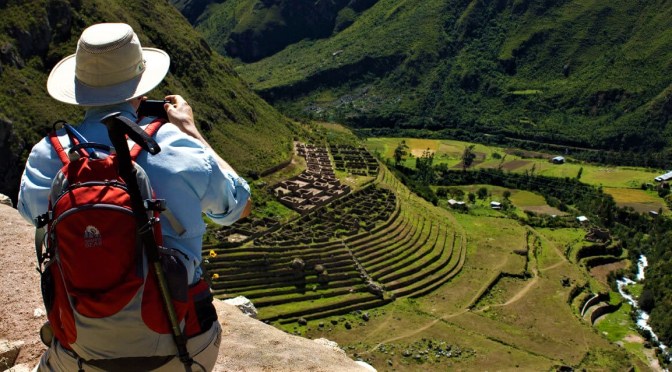
Your final day of hiking: On this day we well hike for 3 hours by a Inca trail spectacular up through lush coffee and tropical fruit plantations, into pristine cloud forest, until reaching the Inca remains of Llactapata (2,700 m / 8,907 ft). The view across of Machu Picchu is magnificent. Few tourists have ever seen it from this side.
Then we hike downhill for 2 hours to the hydroelectric plant where we have lunch. From here you have two choice. Either wait for the short but spectacular train ride (no included), or hike two to three hours along the rail track to the tourist town of Machu Picchu Pueblo and your hostel for the night.

– Meals: Breakfast, Lunch, Dinner
– Climate : cold
– Acomodación: Hostel, Aguas Calientes 1650msnm.
– Distance Travelled: Approximately 9 km
– Hiking time : 4 hour

Day 7: MACHU PICCHU – CUSCO

After an early breakfast at the hotel, we walk uphill to Machu Picchu at 5:00 am. or take the bus from Aguas Calientes to Machu Picchu (Optional bus $16 each way), upon arrival at the Citadel we can appreciate the enigmatic beauty and the incomparable example of architectural perfection and hydraulics of one of the 7 Wonders of the Modern World, we will have a guided tour of about 2 hours, where we can appreciate the Main Plaza, the Circular Tower, Intihuatana, The Royal Quarters, the Temple of the Three Windows and the Cemetery, you are then given free time to stroll around the citadel . You will have all morning in Machu Picchu to take pictures, maybe to climb the Wayna Picchu or Machu Picchu Mountain, enjoy this mystical place. Then we´ll descend by bus to Aguas Calientes for lunch and then calmly return by train to Ollantaytambo where our tourist transport to the city of Cusco will be expecting us, and will later transfer you to your hotel.
OTHER ACTIVITIES:
Climb up Huayna Picchu and appreciate the beauty and magnificence of Machu Picchu from there (We recommend that you book in advance) Not Included
Climb Machu Picchu Mountain and appreciate the beauty and magnificence of Machu Picchu from there (We recommend that you book in advance) Not Included
Visit the new local museum or the hot springs in Aguas Calientes later in the day. Not Included

– Meals: Breakfast
– Tour: 2 hour guided tour of Machu Picchu

CHOQUEQUIRAO TREK TO MACHU PICCHU 8 DAYS

Day 1: CUSCO – CACHORA – COCAMASANA – PLAYA ROSALINA.

We will pick you up at your hotel in a private bus. We start from Cusco, then we go to the town of Cachora (3100 masl), here we find the carriers and support staff, in Cachora we’ll start our walk, after 2 hours of walking we reach Capuliyoc (2915 m) from there we’ll have a beautiful view of the snowy peaks Padrayoc, Wayna Cachora and the Apurimac valley. Then we’ll descend toward Coca Masana (2330m) where the climate becomes warmer and the flora and fauna begin to change. Finally we reach the Rosalina beach (1550m) located on the bank of the Apurimac River where we will have dinner and spend the night.

– Meals: Lunch, Dinner
– Acomodación: Camp, Playa Rosalina 1550 msnm
– Climate : warm and sunny
– Distance Travelled: Approximately 12km
– Hiking time : 6 hour

Day 2: PLAYA ROSALINA – CHOQUEQUIRAO.

This day is the hardest of the five days, we will get up very early. After breakfast, we begin our trek by a steep road for about 5 hours until we reach Raqaypata where we will have lunch. Throughout the walk we will observe many orchids and wild flowers, many birds. From Raqaypata we’ll walk for about two hours to the archaeological site of Choquequirao and there we will observe the sunset and the flight of the condor. Our campsite will be installed outside the ruins.

– Meals: Breakfast, Lunch, Dinner
– Acomodación: Camp, Choquekiraw 3100 msnm
– Climate : warm and cold at night
– Distance Travelled: Approximately 14km
– Hiking time : 7 hour

Day 3: CHOQUEQUIRAO – MAIZAL

After breakfast. We dedicate this mornig to explore the Choquequirao, and then start our trek passing for Choquequirao Ruins, uphill through cloud forest, Mountains and valleys to reach the Choquequirao pass. There will observe different species of birds, different varieties of orchids, and local coca plantations. then we will continue our trek until we reach the Blanco river where we will have lunch and you can dip your feet in the cool waters, we have a rest before starting a difficult climb to our campsite of Maizal (3000 m / 9842 f.) The climb is 3- 4 hours long.

– Meals: Breakfast, Lunch, Dinner
– Acomodación: Camp, Maizal 3000msnm.
– Climate : warm, windy and cold at night
– Distance Travelled: Approximately 18km
– Hiking time : 8 hour

Day 4: MAIZAL – YANAMA.

Due to the ecosystem’s constant changes, this day is both the most ardous and the most spectacular one. After breakfast, we will begin our walk where you can enjoy the view of the beautiful landscape. Since the Inca trail in this region is not in good conditions during the rainy season, we ask you to watch your steps carefully. In San Juan (4170m/13681f) we will enjoy the beautiful view of the valleys, the mountains and the glaciers, from which some of the latter peak more than 5000m/16404f. Our camping place will be in the little village of Yanama (3530m/11581f).

– Meals: Breakfast, Lunch, Dinner
– Climate : warm and hummed
– Acomodación: Camp, Yanama 3530 msnm.
– Distance Travelled: Approximately 17km
– Hiking time : 8 hour

Day 5: YANAMA – TOTORA

Early in the morning, we will head for the highest pass of this trip – Yanama (4670m). If we are lucky we will even see a condor flying. During the day, we will enjoy frequently the view of snow capped mountains such as Salkantay (6264m) and Pintuyu (5450m). Our camping place will be in the valley of Totora pampa (3100m).

– Meals: Breakfast, Lunch, Dinner
– Climate : cold and windy
– Acomodación: Camp, Totora 3100 msnm.
– Distance Travelled: Approximately 20 km
– Hiking time : 9 hour

Day 6: TOTORA – PLAYA – SANTA TERESA

At Totora pampa we will get the chance to meet Quechua-speaking Andean people who live from agriculture and cattle breeding. The vegetation on our way gets more and more bizarre and reveals its diversity of orchids, bromelains and other plants. We will also see some plantations for coffee, papaya, passion fruit and avocado. Our camping site will be in La Playa (2100m/6890f) or in Santa Teres (1600m/5249f). Note: According to the group’s whishes, it is possible to change the itinerary a bit and visit the hot springs in Santa Teresa this day.

– Meals: Breakfast,
– Climate : warm
– Acomodación: Camp, Santa Teresa 1600msnm.
– Distance Travelled: Approximately 18 km
– Hiking time : 10 hour

Day 7: SANTA TERESA – AGUAS CALIENTES

The last breakfast with our crew, after drive to hydroelectric 40 min where is the start point for hike to Aguas Calientes 3 hours, on the trail is clear to appreciate a lot type of orchid and birds, the big scenery is the view to Machu Picchu city is situated dense a bizarre vegetation and offers an exceptional view of the mountain Machu Picchu, for sick or tired kickers optional train service (US $ 18.00) there we will spend the night in a hotel in Aguas Calientes.

– Meals: Breakfast, Lunch, Dinner
– Climate : warm
– Acomodación: Hostel, Aguas Calientes 2050msnm.
– Distance Travelled: Approximately 9 km
– Hiking time : 4 hour

Day 8: MACHU PICCHU – CUSCO

After an early breakfast at the hotel, we walk uphill to Machu Picchu at 5:00 am. or take the bus from Aguas Calientes to Machu Picchu (Optional bus $16 each way), upon arrival at the Citadel we can appreciate the enigmatic beauty and the incomparable example of architectural perfection and hydraulics of one of the 7 Wonders of the Modern World, we will have a guided tour of about 2 hours, where we can appreciate the Main Plaza, the Circular Tower, Intihuatana, The Royal Quarters, the Temple of the Three Windows and the Cemetery, you are then given free time to stroll around the citadel . You will have all morning in Machu Picchu to take pictures, maybe to climb the Wayna Picchu or Machu Picchu Mountain, enjoy this mystical place. Then we´ll descend by bus to Aguas Calientes for lunch and then calmly return by train to Ollantaytambo where our tourist transport to the city of Cusco will be expecting us, and will later transfer you to your hotel.
OTHER ACTIVITIES:
Climb up Huayna Picchu and appreciate the beauty and magnificence of Machu Picchu from there (We recommend that you book in advance) Not Included
Climb Machu Picchu Mountain and appreciate the beauty and magnificence of Machu Picchu from there (We recommend that you book in advance) Not Included
Visit the new local museum or the hot springs in Aguas Calientes later in the day. Not Included

– Meals: Breakfast
– Tour: 2 hour guided tour of Machu Picchu


Useful information on Choquequirao, the other lost city of the Incas

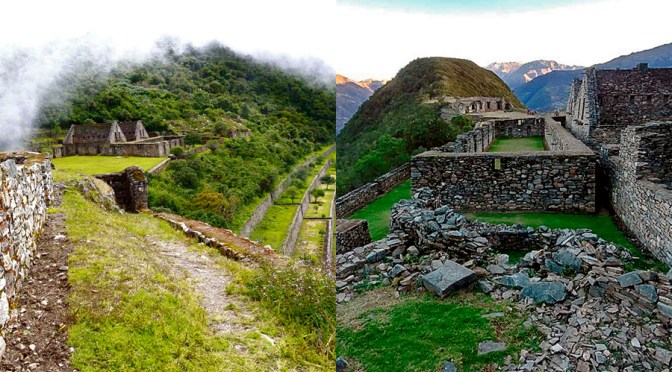
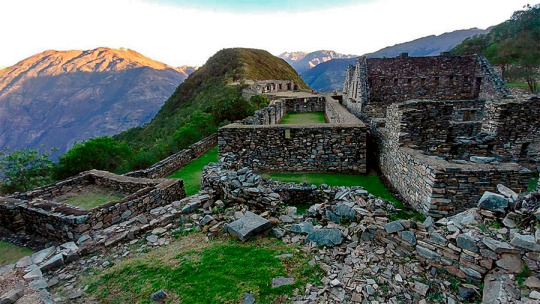
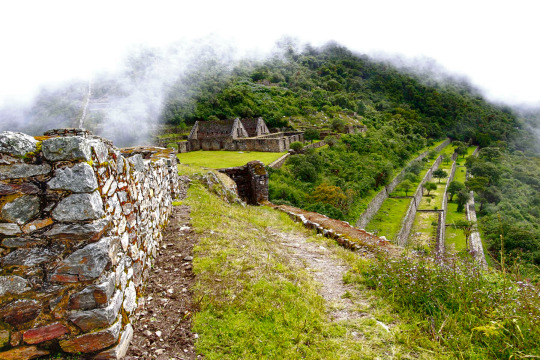
Choquequirao known as the sacred sister of Machu Picchu because it has a structural and architectural similarity, archaeological monuments are made up of terraces distributed on different levels which were leveled and fenced with stones to form a platform with an approximate area of ​​150 square meters.

CHOQUEQUIRAO TREK INFORMATION

Location

The Choquequirao ruins are located at 13 ° 32 ’latitude and 77 ° 44’ west longitude, it is located at 3033 masl in the mountains of the snowy Salkantay north of the Apurímac river in the district of Santa Teresa province of the department of Cusco.

How to get

Currently to reach the last Inca fortress is the land route, the best known route of how to get to Choquequirao is by taking the road to Abancay, and at km 154 choose the detour that will direct you to the town of Cachora.

The route to Choquequirao has narrow paths which must be walked very carefully, also have a good physical condition and the proper equipment for this trek.

Weather

Due to its height, Choquequirao enjoys a temperate climate. However, it should be noted that the Choquequirao path is warm due to the Apurímac canyon.

Description

Choquequirao (comes from the Aymara words chuqui, gold, and from Quechua k’iraw, cradle, that is to say: “cradle of gold”), is another of the archaeological zones also known as the Inca citadel, it is located between the ramifications of the Nevado de Salcantay, southern Peru. These archaeological remains of Choquequirao are made up of a set of buildings and terraces distributed on different levels, from the lower Sunch’u Pata level to the highest truncated summit, which was leveled and fenced with stones to form a platform with an area approximately 150 square meters.

Choquequirao (sometimes also referred to as Choqequirau or Choquekiraw), is also known as the “sacred sister” of Machu Picchu for the structural and architectural similarities presented with it. Well, not too long ago it became known about this majestic place, thus awakening the interest of many tourists and researchers.

Biodiversity

The environment of Choquequirao is one of the richest in biodiversity, biologists, ecologists and experts mention this, however in this area, the number of species of plants and animals that exist is not known exactly, despite this deficiency and From the few scientific studies carried out, it has been possible to determine the existence of various life forms.

Among the most relevant species are: the condor, the fox, the skunk, the puma, the spectacled bear, the taruca, the vizcachas, the pica pica, the tall toucan, the quetzales and the tigrillos. All these species have been conditioned despite the temperature variations such as the sun throughout the day and the inclement frosts at night. This space can also be seen to the cock of the rocks, Peru’s national bird.

The flora of the place is made up of giant ferns and a great variety of orchids, where the wakanki variety stands out. At the bottom of the great valley and under the thermal effect of the water course that runs through it, the forests of the mountain eyebrow provide their warmth and ideal conditions for a huge variety of crops of coca, annatto, corn, cocoa, coffee and fruit trees.

From the environmental point of view, the main value of these presented ecosystems resides in the role played by the exuberant forests that grow in the high parts of the mountains for the maintenance of the water balance of the region, capturing the rainwater and leading it without causing erosion towards the Apurimac River. MORE INFORMATION OF CHOQUEQUIRAO TREK TO MACHU PICCHU