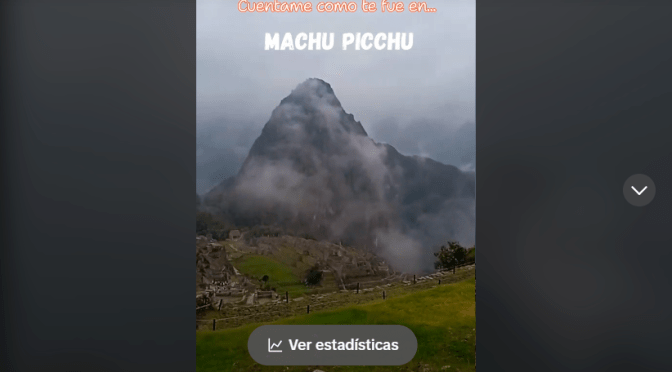
👉 “Mi visita a Machu Picchu fue mágica, incluso con una ligera lluvia que envolvía la ciudadela en una neblina mística. El clima le dio un encanto especial, haciendo que cada rincón se sintiera más sagrado y lleno de historia.”
Category Archives: travel
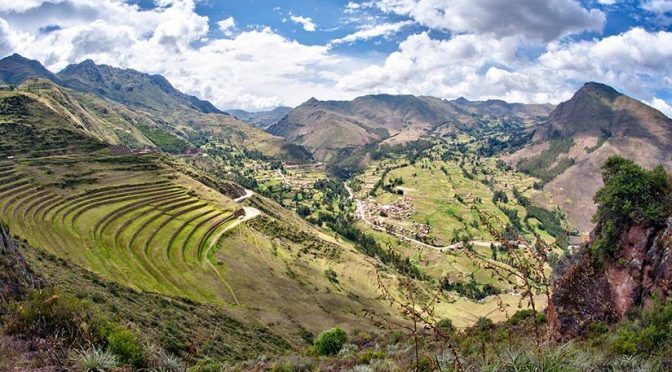
The Ultimate Guide to Pisac Ruins in Peru
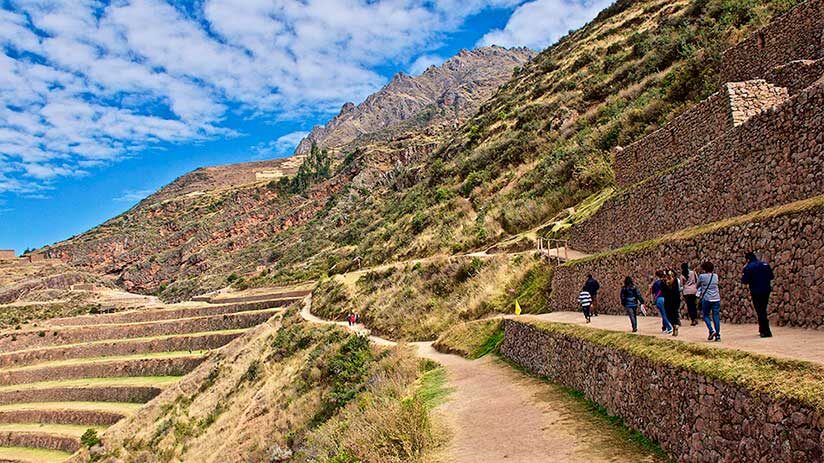
When you travel to Peru, the Imperial City and its beautiful Sacred Valley will be two of the highlights to enjoy within the many destinations of Peru. In general, the Sacred Valley and Cusco are usually mandatory stops for those looking to visit the Wonder of the World. But the magnificent Sacred Valley has many attractions of great historical and anthropological value. Therefore, when you think about things to do in Cusco, these two destinations are points that you cannot ignore. Among the different places to visit, Pisac ruins are one of the most iconic and representative of the Sacred Valley of the Incas.
It is often one of the most attractive and important points within the different routes. And that is why, together with the travel experts of Cusco Journeys, we have prepared a small article about the Pisac ruins. Because being able to explore these ruins is something that no one should miss.
Location Of Pisac
Pisac is located at the eastern end of the Sacred Valley map. Just a 1-hour drive from the beautiful Imperial City. Like Cusco and the different towns in the Valley, the Ruins of Pisac are located high up. Specifically, about 34 kilometers from Cusco. Regarding the ruins, these are located 3,300 meters above sea level, while the town is only 2,974 meters above sea level. This village is relatively lower than Cusco, so it is also an excellent destination to acclimatize to the altitude, and there are numerous ways to get there. It can be reached by the road that leads to the beautiful ruins of Sacsayhuaman. In addition, the beautiful traditional city has different establishments and luxury hotels to enjoy. You will find cheap accommodation options as other much more exclusive alternatives.
History Of Pisac
Pottery remains found in the area indicate that the region has been occupied for a long time. There is evidence that there were two pre-Inca settlements, the Ayarmaka and Pinaguas, between the slopes of the Vilcanota river tributaries called Quitamayo and Chongo. The remains of these pre-Inca settlements saw the Pisac area boom with its agricultural terraces and its alluvial plains. But as the threat of attack from outside tribes weakened, slowly the villagers left the zone and moved closer and closer to the regions near the main roads that now depart from Cusco and Urcos.
When the Inca Empire conquered the area, it was on the ridge of the mountain that magnificent buildings were built. The consensus states that it was constructed by the Inca emperor Pachacuti, not before 1440. Many scholars have concluded that Pachacuti designed it as a multifunctional residence. The site offers a real refuge isolated from the capital. People believe that here is where the Panacea (family and offspring of the Inca) relaxed and had religious ceremonies. Nowadays, it offers an incredible view of the current location of the city and a spectacular view of Sacred Valley.
Origin Of The Name Pisac
Some historians suggest that the word Pisac derives from the word “Pisaca” which means Partridge. They even propose that the numerous agricultural terraces represent the wings of a Partridge. Specifically, Puna Partridge, which was a bird abundant in the area.
The Ruins of Pisac
The astonishing ruins are located high above the valley floor and the modern colonial city of Pisac. The Inca archeological site is considered one of the best-preserved in Peru, so it is not surprising to be one of the tours in the region. The entire site is spread over a vast green area of the entire mountain, so exploring the complex can take some time. Within the site, you can find a residential settlement, ceremonial baths, and the largest Inca cemetery in South America. The entire archaeological site is surrounded by numerous agricultural terraces that blend harmoniously with the landscape. The Pisac ruins are divided into four main areas:
Ajachapata Terraces: If the visitor walks 200 meters from the Pisac main square, northbound, beginning the climb up to the mountain, he will see a series of 40 platforms, situated on its slope, these forming a Puna Partridge wing. The shortest terrace is located at the base, close to the Urubamba river’s lands, and the longest is situated closer to the mountain top. Without a doubt, Ajachapata will be the first interesting attraction to see among these Peruvian ruins.
Towers (Qoriwayrachina): Around 20 towers are situated throughout the complex. Therefore, Pisac is known as: “The Towers city”. These buildings can be divided into two types: The Cockpit turrets; these are conical towers of well-carved stones located on the edges of mountain ledges with waterways connections. The other ones are the Watchtower turrets that are conical towers of rougher structure, compact mass fills its interior and a flat surface crown its top. These turrets were not hollow enclosures, therefore the Inca watchman had to stand on its top to spot possible far threats. The most famous among these towers is the Qoriwayrachina tower.
Inca cemetery (Tankanamarka): It is maybe the highest Inca cemetery in all of South America. Nowadays, we find 1000 Incas tombs carved over the hillside of a cliff, at the other side of the Quitamayu river. The experts affirm that there were more than 10,000 tombs in the Incas times (the rest was looted by treasure hunters)
The Inca Wall (The door of the snakes): This is a discontinuous structure made up of big stones. Many of these walls are distributed in necessary places. The Inca Wall has 5 doors, the main of which is called “The door of the snakes” and it was the entrance to principal neighborhoods located on the mountain top.
The Pisac Tours
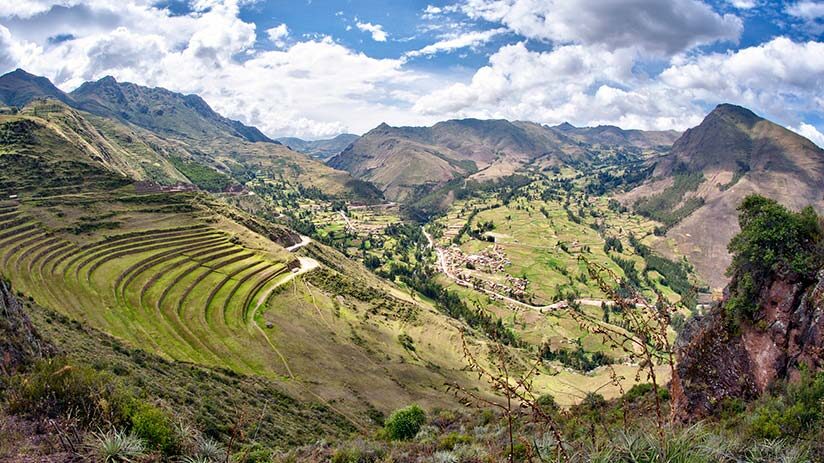
Approximately 3-4 hours are perfect for a complete tour of the Pisac ruins. Once at the entrance, you will be able to appreciate a huge set of agricultural terraces. If you continue along the busiest road, you will reach the neighborhood of Q’alla Q’asa located on the side of the mountain. There you will be able to appreciate a series of ceremonial baths fed by a complex network of channels. If you continue the path along the hillside you will reach the main entrance of the temples. The undulating path continues until it reaches a narrow tunnel. As you exit the tunnel, you will be able to appreciate the beautiful residential and agricultural area known as Pisaca or Q’allaqasa.
The truth is that the archeological complex has a lot to offer. For example, the temple complex or the ceremonial center is made up of a dozen buildings. All are built with impeccable masonry work. The Temple of the Sun and the Intiwatana are the centerpiece of the site. This temple is perfectly aligned with the dawn of the winter solstice.
If you were wondering: what was Pisac used for? We can deduce that like other sites, it had a ceremonial, astronomical and religious function for the Incas. But having several sites we can say that the Pisac complex was multifunctional. From the temple complex, the trail continues to a viewpoint. Although other trails can lead you to the other parts of the beautiful complex.
Hike To Pisac
The hike is suitable for anyone of any age. As long as you have a good disposition and will to see amazing Inca ruins. From the small town, you can follow the path that leads to the back of the town and slowly climbs up the mountain towards the ruins. In general, most of the trail goes downhill, except for the first section that can go from top to bottom. Also, the path follows the mountainside, making it quite difficult to get lost. The entire route is well signposted, but we recommend enjoying this route with a certified guide.
When you reach the top, you will have to make your way through the different buses and taxis stuck in the parking lot. From there, you will be able to appreciate the different terraces that descend the side of the mountain. The Pisac return hike from the top to the traditional market does not usually take more than 2 hours. But of course, the time can vary depending on how long you walk through the ruins and the type of tour you choose to do.
Visit the colourful Pisac Market
The Traditional Handicraft market of Pisac is a traditional market which is one of the most famous in Cusco. It draws many visitors to the Sacred Valley, especially on Sundays. This authentic and colorful market was an important commercial place for centuries. You can find hand-painted ceramics, articles related to the Inca culture, hand-woven products of alpaca fiber, jewelry, and other handicrafts, as well as food, fruits, and vegetables. The Pisac market is one of the best places to find souvenirs to buy in Peru.
Also the Pisac town is much more than an archeological site, it is also its wonderful and picturesque town as its iconic market. The archeological complex bears the same name as the picturesque village. The town is surrounded by beautiful mountains. Its beautiful square and church are some of the busiest places.
Usually, Pisac ruins are included in a complete tour package. This receives the name of “Sacred Valley tour” and it typically includes Ollantaytambo archaeological park and Chinchero town, too. The journey offers private transportation and the service of a tour guide. The tour begins around 7 or 8 am and finished in the same Cusco at 5 or 6 pm. The cost is many, however, if you want to reach the best service and price. We can help you!
Peru has so much to offer, it can be hard to know where to start. With many years of experience in the tourism sector, Cusco Journeys is happy to help with anything regarding your trip to Pisac and any tours around it. Make your Pisac
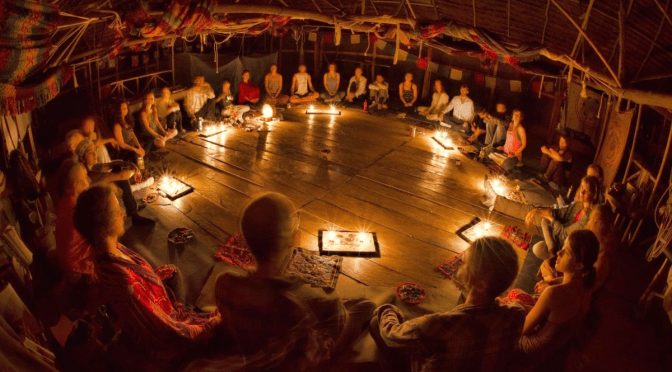
What is the Ayahuasca Ceremony in Peru?
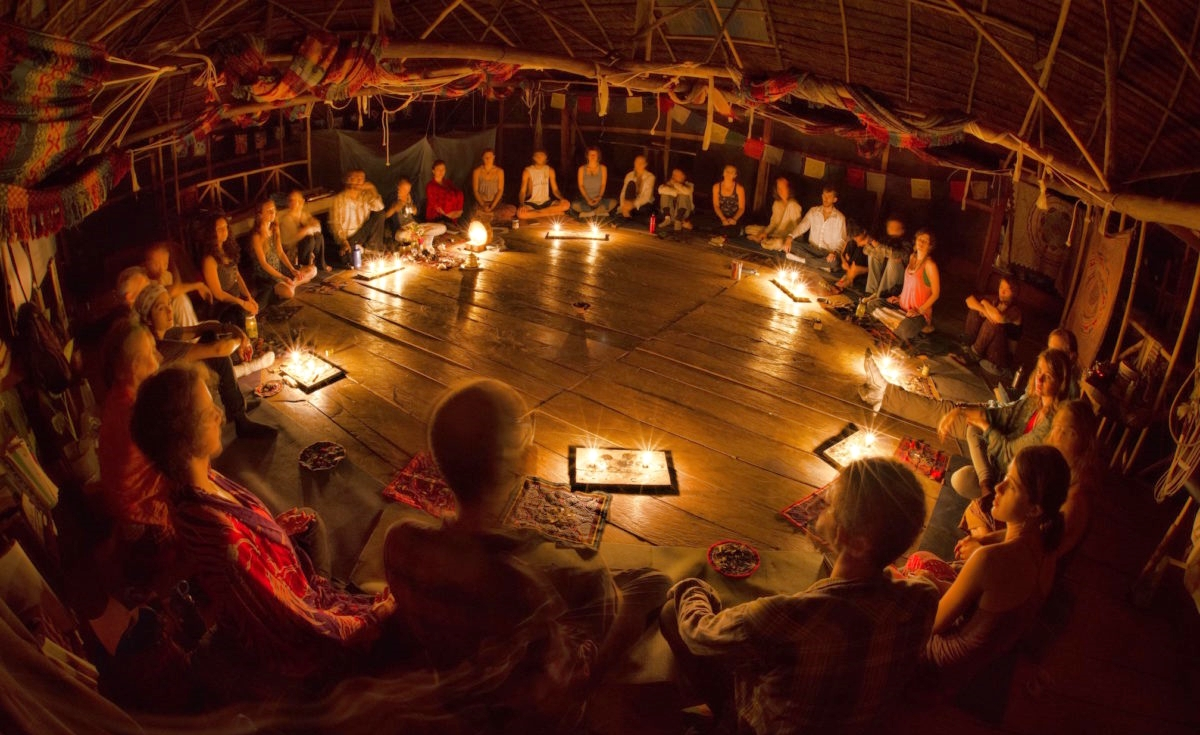
It’s no surprise that Peru is a must-see destination for many travelers. From Machu Picchu tours and the Rainbow Mountains to the rich history, delicious food, and unique culture, visiting Peru is an unforgettable experience.
Aside from taking hikes or tours, many tourists enjoy immersing themselves in traditions or festivals like Inti Raymi or a spiritual Ayahuasca ceremony.
Whether you’re planning a trip to Peru to take part in an Ayahuasca ceremony or are curious to know more about why people describe it as a spiritual awakening, we discuss everything you might need to know.
What is Ayahuasca?
So, can you do Ayahuasca in Peru? Yes, you can. First of all, it is a good idea to eliminate any misconceptions you have about Ayahuasca. Despite the tabloid media and other news, Ayahuasca is not a recreational drug. It is not something to get high and enjoy the moment or a magic pill that will solve your problems. For the indigenous people of the Amazon, Ayahuasca is more than a simple plant, it is a spirit, a sacred and ancestral ritual for healing.
And what exactly is Ayahuasca? It is an infusion made by shamans of the Amazon jungle. It serves to enter altered states of consciousness and obtain new perspectives on life. Historically, it is known that many visited shamans to heal themselves from physical, mental, or emotional reliefs. In general, those who drank from the infusion did so in order to receive guidance from the “spirit” that inhabits the plant. Today, the tradition remains strongly rooted in Ayahuasca ceremonies. And during the last decades, shamans began to serve the infusion to different patients under their supervision.
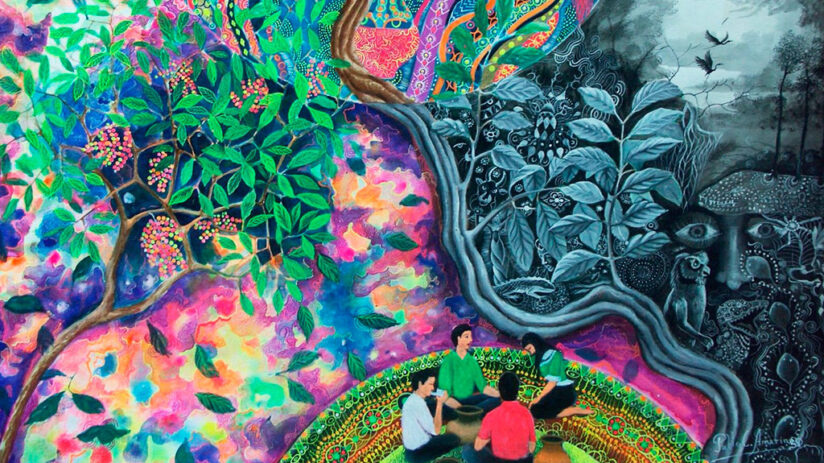
Ayahuasca is a jungle vine that grows in the middle of the jungle. It is commonly found in the territories of Colombia, Peru, Bolivia, Brazil, and the Guyanas. The plant is quite revered by the indigenous tribes as well as the shamans of the Andean regions. It is considered a “Master Plant”. The term Ayahuasca derives from the ancient Quechua language. The Quechua words “Aya” translates to the dead, while “Huasca” translates to vine or rope. That is to say, the “Rope of the Dead” or the “Vine of the Dead”. The concoction has been used for more than 5000 years for both individual and collective healing. If you are looking to visit Machu Picchu, you can enjoy one of these ceremonies.
Despite common belief, preparing Ayahuasca in Peru is quite difficult. Most of those who try it do not have the desired effects or even have bad experiences accompanied by indigestion. Therefore, if you are looking to try the real thing, you have to travel to the Amazon basin and do it with a renowned Shaman. Ayahuasca is made by shamans using the Ayahuasca vine and the Chacruno leaves. Both can be obtained naturally in the middle of the Amazon basin. The Ayahuasca vine naturally contains natural chemical compounds that resemble DMT. While the Chacruno leaves allow their metabolization within the body.
According to tradition, these two plants must be collected on a full moon or in the morning. In addition, whoever picks it up must be fasting. It takes about ten kilos of Ayahuasca to prepare the infusion. For this, the Ayahuasca vine is crushed to make them easier to cook. Then a kilo of Chacruna is added. Depending on the shaman, the concoction can include tobacco and coca leaves.
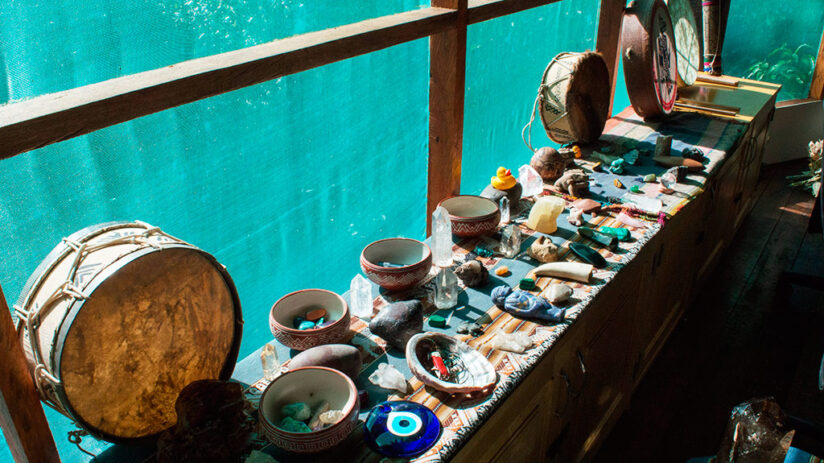
Note that the preparation is boiled for 12 hours in about 50 liters of water. And while it is being prepared, it is accompanied by shamanic chants known in the Amazon as Icaros. It is also accompanied by tobacco puffs while asking for specific intentions. Both the songs and the intentions are invocations to the spirit of Ayahuasca. The 50 liters of the initial preparation is reduced to only 2 liters of Ayahuasca. The end result is a liquid with a viscous texture and a reddish-ocher color. This is one of the many ways to prepare, but everything will depend on the Shaman and his traditional methods.
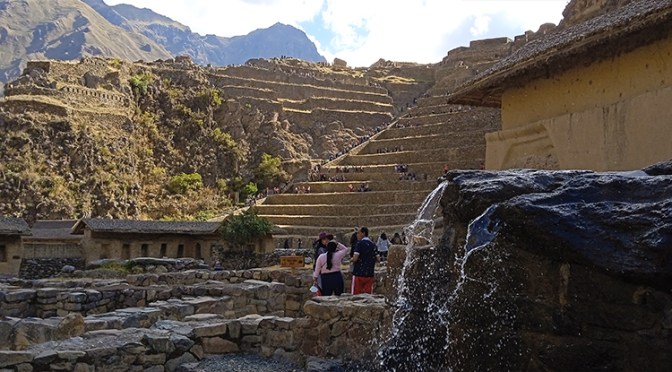
OLLANTAYTAMBO – CUSCO – PERU
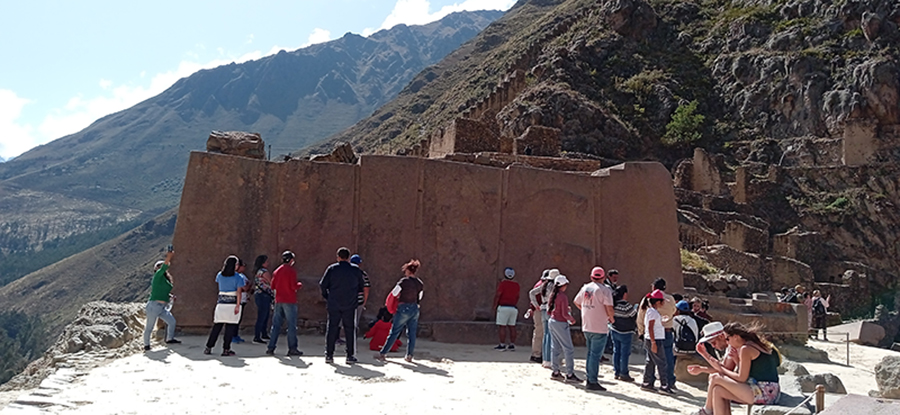
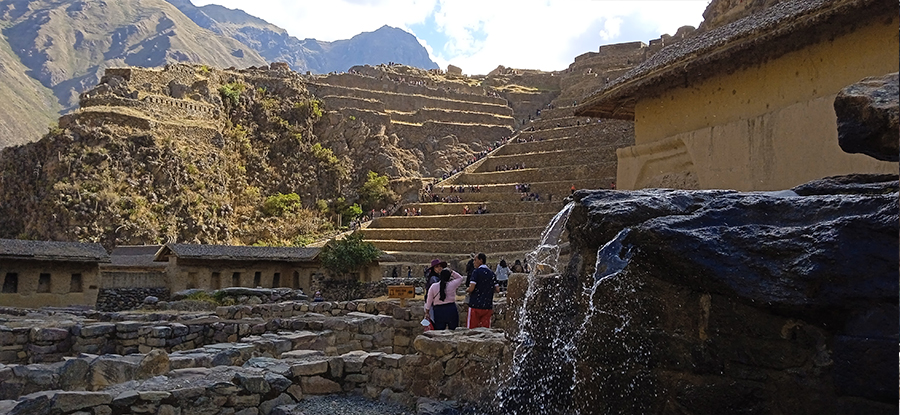
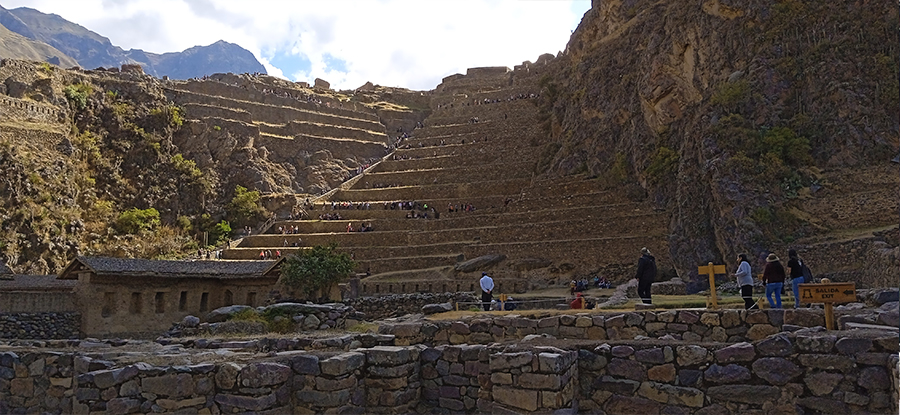
El Valle Sagrado es un lugar maravilloso de comunidades pintorescas, terrazas impresionantes, sitios arqueológicos de gran importancia y paisajes de montaña. Dominado por las imponentes cumbres de la Cordillera Vilcanota, el valle ha sido, y Ollantaytambo es un lugar lleno de misterios, que tiene desconcertado y lleno de dudas a los investigadores.
Reserva Ahora:
 VIAJA Y CONOCE EL CUSCO Y DESCUBRE LOS HERMOSOS PARAJES ANDINOS !!!
 LLAMA Y HAZ TU RESERVACION:
WhatsApp https://bit.ly/mapi5d
 – 084 650500
 info@cuscodestination.com
 http://bit.ly/CuscoDestination
SOMOS “CUSCO DESTINATION Travel agency” Operadora de Viajes En Cusco Destination
#cusco#peru#cuscodestination#machupicchu#machupicchutour
#viajeseconomicos#turismoperu#turismocusco#viajescusco#viajesperu
#viajecusco#viajar#viajesporelmundo
#viajaresvida#viajesbaratos#viajerosporelmundo
 cusco destination