Tag Archives: journey

Useful information on Choquequirao, the other lost city of the Incas

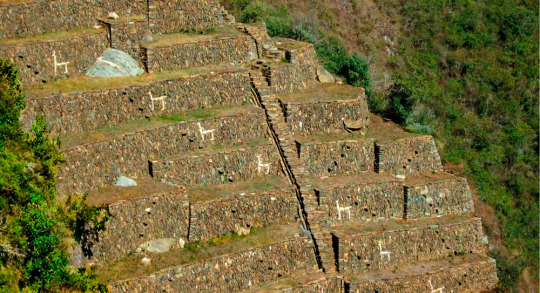
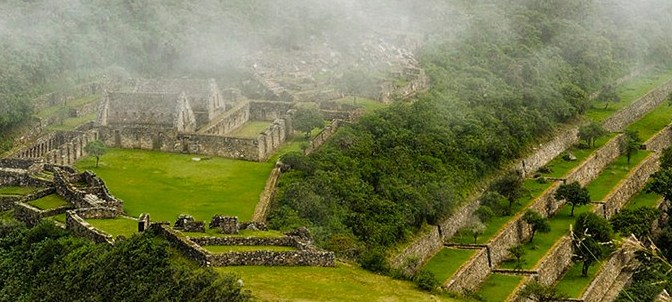
Choquequirao known as the sacred sister of Machu Picchu because it has a structural and architectural similarity, archaeological monuments are made up of terraces distributed on different levels which were leveled and fenced with stones to form a platform with an approximate area of ​​150 square meters.

CHOQUEQUIRAO TREK INFORMATION
Location

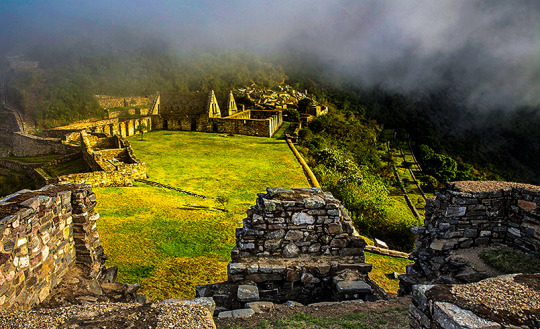
The Choquequirao ruins are located at 13 ° 32 ’latitude and 77 ° 44’ west longitude, it is located at 3033 masl in the mountains of the snowy Salkantay north of the Apurímac river in the district of Santa Teresa province of the department of Cusco.

How to get

Currently to reach the last Inca fortress is the land route, the best known route of how to get to Choquequirao is by taking the road to Abancay, and at km 154 choose the detour that will direct you to the town of Cachora.

The route to Choquequirao has narrow paths which must be walked very carefully, also have a good physical condition and the proper equipment for this trek.

Weather

Due to its height, Choquequirao enjoys a temperate climate. However, it should be noted that the Choquequirao path is warm due to the Apurímac canyon.

Description
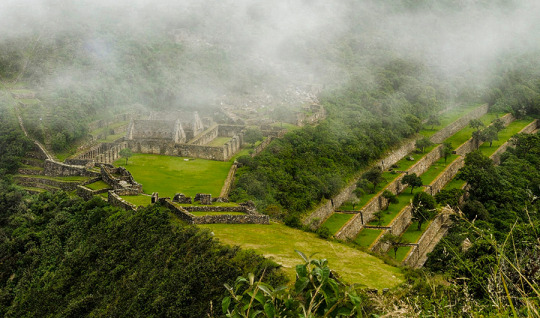
Choquequirao (comes from the Aymara words chuqui, gold, and from Quechua k’iraw, cradle, that is to say: “cradle of gold”), is another of the archaeological zones also known as the Inca citadel, it is located between the ramifications of the Nevado de Salcantay, southern Peru. These archaeological remains of Choquequirao are made up of a set of buildings and terraces distributed on different levels, from the lower Sunch’u Pata level to the highest truncated summit, which was leveled and fenced with stones to form a platform with an area approximately 150 square meters.

Choquequirao (sometimes also referred to as Choqequirau or Choquekiraw), is also known as the “sacred sister” of Machu Picchu for the structural and architectural similarities presented with it. Well, not too long ago it became known about this majestic place, thus awakening the interest of many tourists and researchers.

Biodiversity

The environment of Choquequirao is one of the richest in biodiversity, biologists, ecologists and experts mention this, however in this area, the number of species of plants and animals that exist is not known exactly, despite this deficiency and From the few scientific studies carried out, it has been possible to determine the existence of various life forms.

Among the most relevant species are: the condor, the fox, the skunk, the puma, the spectacled bear, the taruca, the vizcachas, the pica pica, the tall toucan, the quetzales and the tigrillos. All these species have been conditioned despite the temperature variations such as the sun throughout the day and the inclement frosts at night. This space can also be seen to the cock of the rocks, Peru’s national bird.

The flora of the place is made up of giant ferns and a great variety of orchids, where the wakanki variety stands out. At the bottom of the great valley and under the thermal effect of the water course that runs through it, the forests of the mountain eyebrow provide their warmth and ideal conditions for a huge variety of crops of coca, annatto, corn, cocoa, coffee and fruit trees.

From the environmental point of view, the main value of these presented ecosystems resides in the role played by the exuberant forests that grow in the high parts of the mountains for the maintenance of the water balance of the region, capturing the rainwater and leading it without causing erosion towards the Apurimac River. MORE INFORMATION OF CHOQUEQUIRAO TREK TO MACHU PICCHU
 

The truth about the Choquequirao archaeological site

Is Choquequirao as impressive as Machu Picchu?

This ancient Inca city is known as the younger sister of the Wonder of the World. Some tourists who made the 2-day hike to visit it even say that Choquequirao is better. It is true? Learn the truth about this new archaeological site in Cusco, Peru. CHOQUEQUIRAO TREK ITINERARY


What is Choquequirao really?

Choquequirao is an Inca urban center with features common to others in Cusco, especially Machu Picchu.
The similarity with Machu Picchu is largely due to the similarity of the geography of the place where the enclosure was built.
According to various investigations, Choquequirao would also be a fortress and a ceremonial center. The truth is that due to its hidden location in a high and distant mountain; It was a strategic point for various purposes.
Over the years, like Machu Picchu, Choquequirao was abandoned and covered by the jungle until its re-discovery.

Is it worth visiting Choquequirao?

The only way to get to Choquequirao is on foot. There are 3 days of roads (round trip) including the tour of Choquequirao.
The trek to Choquequirao makes visiting this inaccessible place a difficult but memorable adventure.
Once in Choquequirao, the tourist will be practically alone with an archaeological site as spectacular as Machu Picchu.
The few tourists in the world who visited Choquequirao agree that it was worth it.

Where is Choquequirao located?

Choquequirao is located at 3,103 meters above sea level. in a privileged location: it lies on the impressive canyon of the Urubamba river.
It is located in the foothills of the snowy Salkantay, in the Apurímac valley, in the province of the Convention in Cusco, Peru.

What does Choquequirao mean?

Choquequirao means ‘Cradle of Gold’ in Quechua. It is considered the ‘Sister city of Machu Picchu’, due to its similarities to the Inca City.
In truth, its architecture is as impressive as that of Machu Picchu.
At the moment Choquequirao has the advantage of not receiving the number of visitors that its “older sister” receives.
Few people know Choquequirao. Perhaps due to the difficult walk it takes to get there.


What is the architecture like in Choquequirao?

Choquequirao has numerous Inca buildings. However, currently only 30% of its entire area has been excavated.
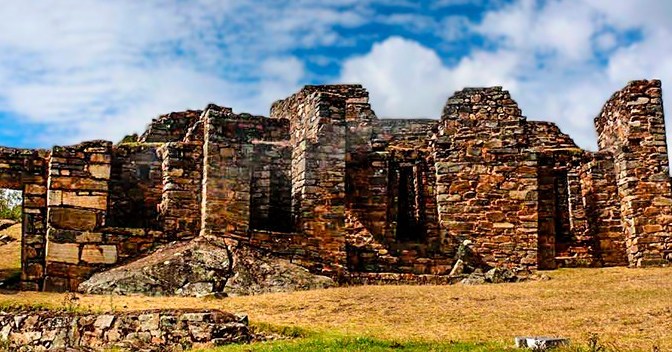
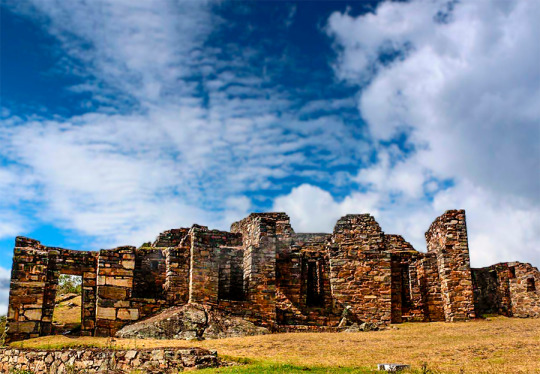
Its most important buildings are quartzite, cut in great detail. The rest of the walls are made of raw stone.
These walls were covered with clay both inside and outside.
The Choquequirao walls are believed to have been painted light orange. Although in reality there are few structures that continue with this coating.

CHOQUEQUIRAO TREK ROUTE


General Information of the Ausangate Mountain – Cusco – Peru

Ausangate, snowy (6,372 m)

Andes (South America)
Vilcanota mountain range (Andes), in Peru, with an altitude of 6,372 m above sea level. It is located about 100 kilometers southeast of the city of Cusco. AUSANGATE TREK INFORMATION

Basic information

  1. Relief unit: Andes
  2. Country: Peru (South America)
  3. Main summit
  4. Region: Peruvian Andes
  5. Altitude: 6,372 m
  6. Latitude: 13 ° 47 ’18’ ‘S
  7. Longitude: 71 ° 13 ’40’ ‘O

Every year, hundreds of mountaineers visit the Andean region of Peru. However, not many are aware of the existence of Ausangate, one of the Inca divinities of 6,410 meters high.

Located near Cusco, the “mountain of seven colors” is the fifth highest peak in Peru. Its remote existence from traditional routes means that few tourists approach its walls and glaciers; However, it is worth visiting for its unmatched beauty.

During the Inca Empire, Ausangate embodied one of its most important divinities. Distinction that still lasts; since, the inhabitants who live in the surroundings continue to consider her as an unreachable and sacred god.

The moderate difficulty of ascending the mountain and the possibility of living a unique experience outdoors, make visiting Ausangate a relevant option.

How to get?. Ausangate is located about 100 kilometers southeast of the city of Cusco. Leaving the city by car, the estimated travel time is 3 hours. Upon arrival in Chilca, you have to continue walking for another 3 hours, approximately, until you arrive at this formidable mountain of colors.

For tourists who do not have their own vehicle, there is the possibility of hiring a tour from the city of Cusco, or renting a private vehicle from Thrifty, one of the leading companies in the business.


Ausangate is the representative mountain of the Andes of Cusco

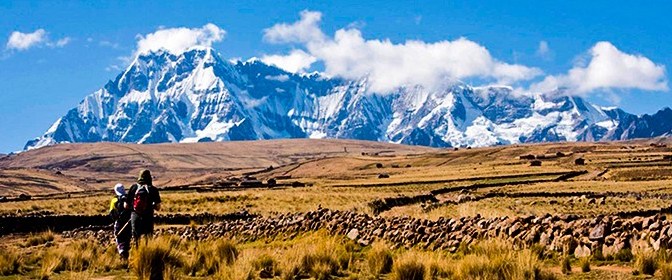
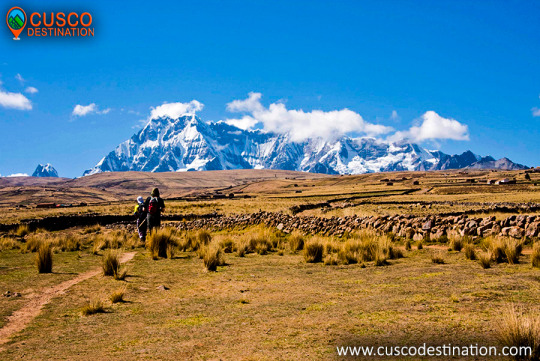
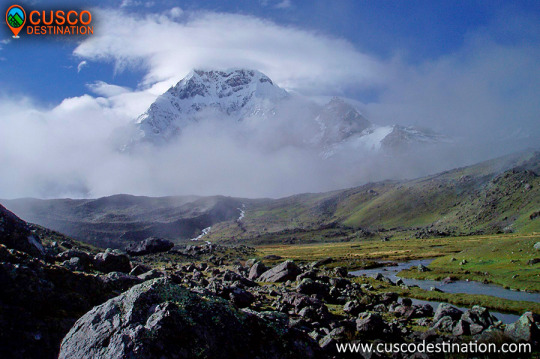
Ausangate is the representative mountain of the Andes of Cusco and Peru. It is located in the Vilcanota mountain range and is one of the most difficult areas to enter and that is very rare in Peru. Its main climate is 6,372 meters above sea level with large lagoons with a bright green / blue color. In addition there are rocks that make the area like a paradise and very modern. The Trek Ausangate is an indescribable adventure, and it is impossible not to be impressed by the enormous beauty of eternal snow. Often you will find stones at a height of more than 5000 meters and also rocks covered with ice tongues that when thawing, extending in magnificent ways forming ice lagoons. The Ausangate trek is one of the tourist destinations in Cusco. AUSANGATE TREK INFORMATION

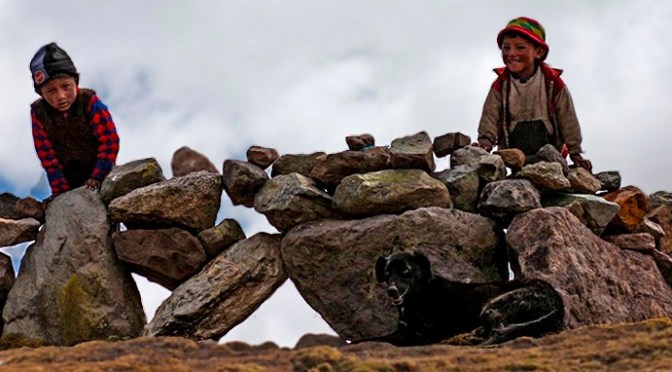
In the Inca mythology of this mountain and the nearby lakes – among which Sibinacocha stands out – the male energy is born that fertilizes the mother earth Pachamama, after a long flow, the waters are lost in the unknown lands of the Amazon to return, to fill the lakes and glaciers every night turned into the river of stars or Willkamayu known in the west as the Milky Way The Community of Chillca made up of shepherds of llamas and alpacas is known as the guardian of these pristine places, from where it can be done mountain walks spending the night in comfortable hostels or tambos, among which Machuracay Tambo stand out, in a trek called “Camino del Apu Ausangate”.

Every year on the north side of Ausangate the feast of Quyllur Rit’i (Quechua: “star snow”) is celebrated before the feast of Corpus Christi, during which thousands of Quechua pilgrims to the Lord of Quyllur Rit’i in the church from Sinakara. Snowy Ausangate normally takes a 7-day tour, it is an adventure that no one should miss.

The Nevado Ausangate is a natural attraction that is located in the Ocongate district, within the Quispicanchi province, in the department of Cusco. That snow-capped mountain is part of the Vilcanota Mountain Range and, according to an ancient legend, was the brother of the snow-capped mountain of Salkantay.

Nevado Ausangate, has a height of 6,384 meters above sea level; and it is considered an apu, or protective deity of the towns that surround it; as well as the most representative mountain in the region. Its size is such that it can be appreciated even if one is in the Sacsayhuamán Fortress, not in vain is it considered the fifth highest mountain found in Peru.

This beautiful snowy Cusco, impresses the eye, for its incredible natural formations; in that one not only are beautiful mirrors of water like the Sivinicocha, of turquoise waters, but also forests of stones, glaciers and high plains that seem to make this natural attraction a paradise on earth, especially for those tourists who are interested for adventure sports since the geographical features of Ausangate make it ideal for practicing sports such as rock climbing, ice climbing, trekking, among other activities.

The Nevado Ausangate is presented before our eyes as a mountain challenge; It is known that the first attempts to ascend it took place at the beginning of the fifties of the last century, there were two the first unsuccessful attempts to conquer the top of the powerful Apu, it was not until 1953, when a German expedition achieved the goal, Climbing the mountain on its southern slope, in posterity, new routes were opened for the conquest of the Apu, however, only in 1983, thirty years after the first ascent, Peruvian feet crowned the top of the majestic snow-capped mountain. AUSANGATE TREK ROUTES CUSCO – PERU