Tag Archives: travel

Celebrating Christmas in the Peruvian Andes

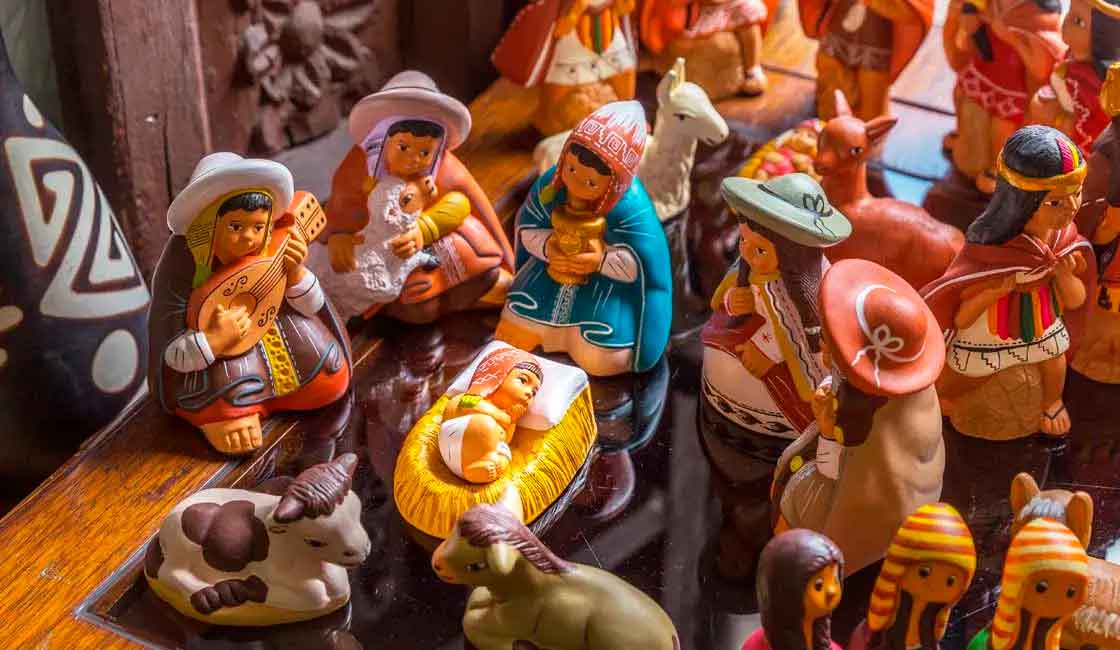
Christmas Traditions in Peru is a very special time of year in the largely Roman Catholic country, full of cozy traditions and religious celebrations with friends and family. Some celebrations are very reminiscent of those in other countries such as North America and Europe, however the holiday certainly gets a unique Peruvian touch with many traditions entirely its own.

Christmas Traditions in Peru is a very special time of year in the largely Roman Catholic country, full of cozy traditions and religious celebrations with friends and family. Some celebrations are very reminiscent of those in other countries such as North America and Europe, however the holiday certainly gets a unique Peruvian touch with many traditions entirely its own. From regional dishes to decorations to city-by-city events, there is also a huge variation in how different parts of the South American country celebrate. It may not be the white Christmas we’re used to, but a Christmas in Peru is one you definitely won’t forget. Though traditions may vary by region, there are some that are common to the nation as a whole.

Christmas in the Andes.
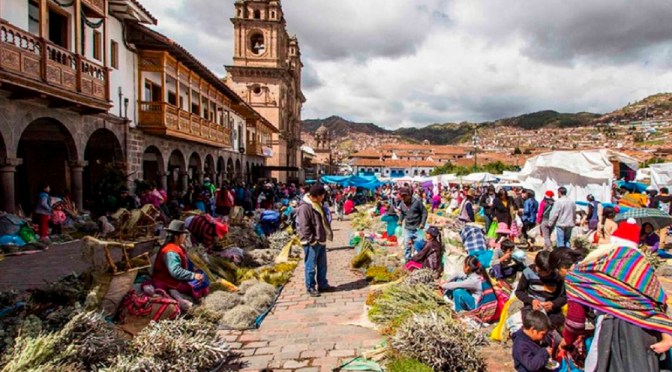
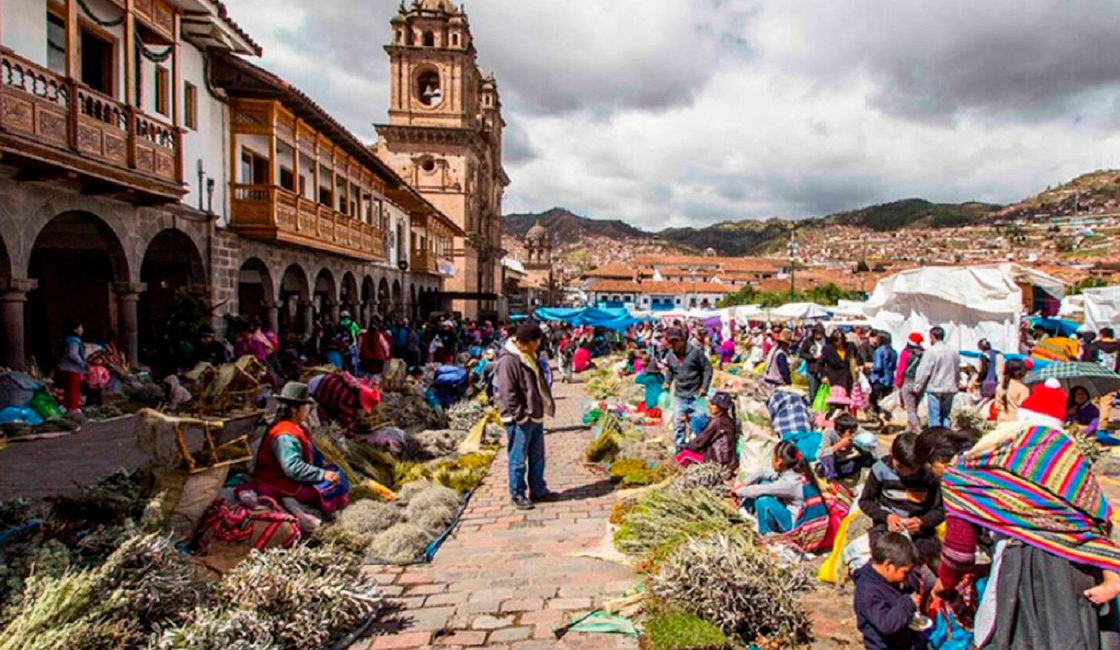
The 24th of December, during daytime, the central plaza of Cusco, the former Inca-capital turns into a spectacular place of encounter. A big market, Santurantikuy, Quechua for “Wind of the Saints” takes over the place. The market, declared National Cultural Heritage, attracts farmers, craftsmen from all over the region to sell their handicrafts and best products, made of wood, metal and cloth.

Niño Manuelito is often represented. This child is the big star of Cusco’s Christmas. Decorated abundantly with luxury and wrapped up in silver, he steals even Jesus’ limelight.

Manuelito is depicted as a child in traditional clothes with a thorn in his foot. Angela Pumayali, a historical guide and inhabitant of Cusco, explains that the tale of Manuelito descends from the countryside. Peruvian farmers and its folklore believed Jesus ran away from his static, rather boring position in the church to play with other children in the fields. During this escapade, a thorn got stuck in his foot. In 1975, this version gained large popularity all over Cusco when a famous artist started to use Manuelito’s image to represent the divine child. Manuelito is another typical example of the creative spirit in Cusco, where Catholic and Incan elements often mingle into a unique fusion.

At the market silver adornments as well as clothes for Manuelito are sold. As he grows, his outfit needs to be renewed.

In Chachapoyas young women, called “Las Pastoras” dress up in colourful woven clothes, carrying the divine child, from church to church, making them compete for best host among the girls.

While further south, near the border with Bolivia, around the lake Titicaca, families read coca-leaves on Christmas Eve in a way to predict the upcoming new year.

Christmas in the Peruvian Amazon.
Where many in the English-speaking world are more likely to binge-watch Christmas specials on TV this year on Christmaszone than get outdoors, some Peruvians have the privilege of celebrating this time of year in the Amazon. Banana leaves and tropical fruit make up the decorations.

The tradition of “the little shepherds” is one of the most particular. At Christmas’ Eve, children dress up and go around visiting the Christmas scenes at the different houses. They receive candy and the typical Peruvian drink chicha morada. When the round is over, the little shepherds chose the winning Christmas scene by handing over a prize.

In another procession of Christmas Shepherds, neighbours gather and dress up as biblical figures following the Star of Bethlehem. Drums, whistles and Amazon-rooted chants accompany their march.

Christmas on the Coast.
The coast’s celebration of Christmas is the one that draws the most from European Christmas traditions. In Lima, like any metropolis, it’s mainly about shopping, lights and Christmas trees, with choirs of children and adults singing Christmas songs along to a soundtrack. In Chiclayo, children dress up like angels, singing songs and invading the streets. Tours To Machu Picchu

However, in certain places on the coast like Ica, where history showed its ugly face through colonial slavery, they celebrate “Black Christmas”. Here, the main character is depicted as “the Black Child”. It’s honoured through a lot of African-inspired dances and finds its zenith on the 24th. The same day, the Virgin of Carmen, also known as “La Peoncita”, is celebrated. She is carried around in processions bouncing on the rhythms of the quijada de burro (jawbone) and the cajóns.

Then, generally, people attend La Misa de Gallo (Rooster’s Mass) at 10 pm, where they bring their own images of the divine child and put them at the churches’ nativity scene to be blessed by the priest.

At midnight, people raise a toast with (a version of) champagne and baby Jesus is finally placed in his crib. After the fireworks and the crackers, the dinner takes off. In most families, it consists of turkey, hot chocolate, panettone, apple puree and Peru’s cocktail of national pride, the pisco sour.
Feliz Navidad!!!

Most importantly, make sure you know how to say “Merry Christmas!” to all your new friends in Peru. “Feliz Navidad!” is “Merry Christmas!” in Spanish, and how everyone will greet each other during the holidays.

The Ultimate Guide to Pisac Ruins in Peru

Pisaq - Sacred Valley Tour

When you travel to Peru, the Imperial City and its beautiful Sacred Valley will be two of the highlights to enjoy within the many destinations of Peru. In general, the Sacred Valley and Cusco are usually mandatory stops for those looking to visit the Wonder of the World. But the magnificent Sacred Valley has many attractions of great historical and anthropological value. Therefore, when you think about things to do in Cusco, these two destinations are points that you cannot ignore. Among the different places to visit, Pisac ruins are one of the most iconic and representative of the Sacred Valley of the Incas.

It is often one of the most attractive and important points within the different routes. And that is why, together with the travel experts of Cusco Journeys, we have prepared a small article about the Pisac ruins. Because being able to explore these ruins is something that no one should miss.

Location Of Pisac
Pisac is located at the eastern end of the Sacred Valley map. Just a 1-hour drive from the beautiful Imperial City. Like Cusco and the different towns in the Valley, the Ruins of Pisac are located high up. Specifically, about 34 kilometers from Cusco. Regarding the ruins, these are located 3,300 meters above sea level, while the town is only 2,974 meters above sea level. This village is relatively lower than Cusco, so it is also an excellent destination to acclimatize to the altitude, and there are numerous ways to get there. It can be reached by the road that leads to the beautiful ruins of Sacsayhuaman. In addition, the beautiful traditional city has different establishments and luxury hotels to enjoy. You will find cheap accommodation options as other much more exclusive alternatives.

History Of Pisac
Pottery remains found in the area indicate that the region has been occupied for a long time. There is evidence that there were two pre-Inca settlements, the Ayarmaka and Pinaguas, between the slopes of the Vilcanota river tributaries called Quitamayo and Chongo. The remains of these pre-Inca settlements saw the Pisac area boom with its agricultural terraces and its alluvial plains. But as the threat of attack from outside tribes weakened, slowly the villagers left the zone and moved closer and closer to the regions near the main roads that now depart from Cusco and Urcos.

When the Inca Empire conquered the area, it was on the ridge of the mountain that magnificent buildings were built. The consensus states that it was constructed by the Inca emperor Pachacuti, not before 1440. Many scholars have concluded that Pachacuti designed it as a multifunctional residence. The site offers a real refuge isolated from the capital. People believe that here is where the Panacea (family and offspring of the Inca) relaxed and had religious ceremonies. Nowadays, it offers an incredible view of the current location of the city and a spectacular view of Sacred Valley.

Origin Of The Name Pisac

Some historians suggest that the word Pisac derives from the word “Pisaca” which means Partridge. They even propose that the numerous agricultural terraces represent the wings of a Partridge. Specifically, Puna Partridge, which was a bird abundant in the area.

The Ruins of Pisac

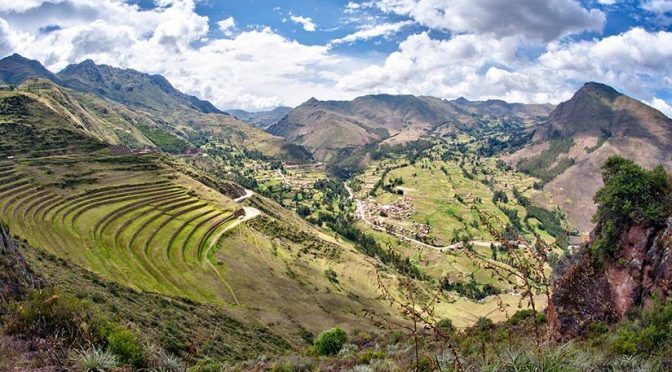
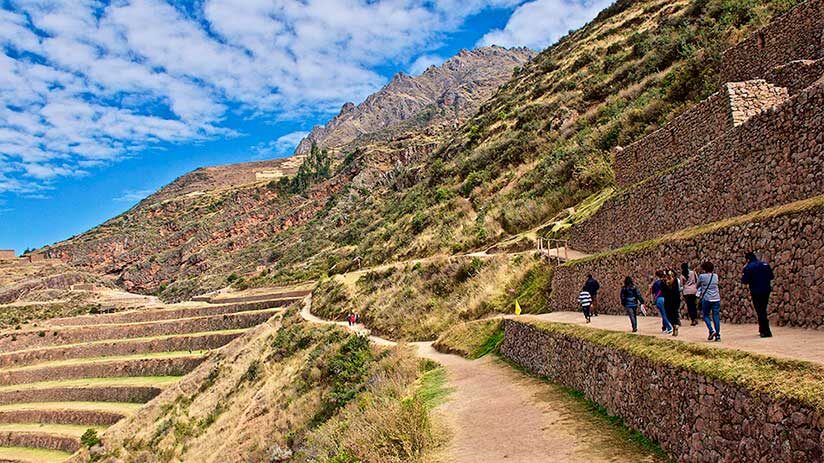
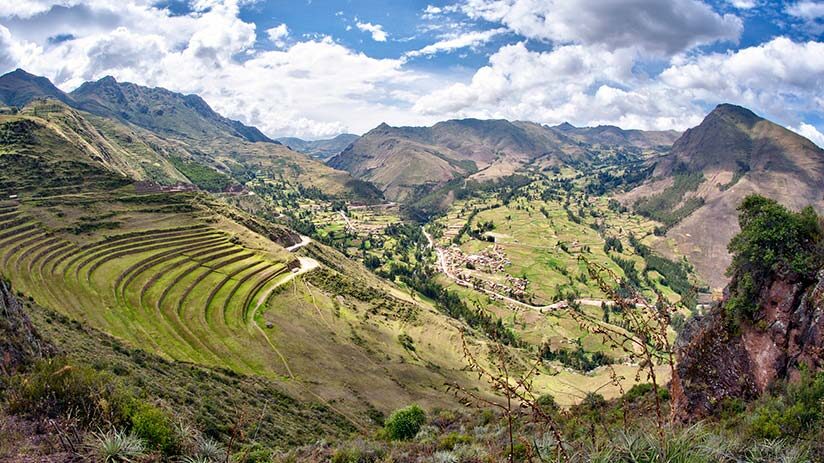
The astonishing ruins are located high above the valley floor and the modern colonial city of Pisac. The Inca archeological site is considered one of the best-preserved in Peru, so it is not surprising to be one of the tours in the region. The entire site is spread over a vast green area of the entire mountain, so exploring the complex can take some time. Within the site, you can find a residential settlement, ceremonial baths, and the largest Inca cemetery in South America. The entire archaeological site is surrounded by numerous agricultural terraces that blend harmoniously with the landscape. The Pisac ruins are divided into four main areas:

Ajachapata Terraces: If the visitor walks 200 meters from the Pisac main square, northbound, beginning the climb up to the mountain, he will see a series of 40 platforms, situated on its slope, these forming a Puna Partridge wing. The shortest terrace is located at the base, close to the Urubamba river’s lands, and the longest is situated closer to the mountain top. Without a doubt, Ajachapata will be the first interesting attraction to see among these Peruvian ruins.
Towers (Qoriwayrachina): Around 20 towers are situated throughout the complex. Therefore, Pisac is known as: “The Towers city”. These buildings can be divided into two types: The Cockpit turrets; these are conical towers of well-carved stones located on the edges of mountain ledges with waterways connections. The other ones are the Watchtower turrets that are conical towers of rougher structure, compact mass fills its interior and a flat surface crown its top. These turrets were not hollow enclosures, therefore the Inca watchman had to stand on its top to spot possible far threats. The most famous among these towers is the Qoriwayrachina tower.
Inca cemetery (Tankanamarka): It is maybe the highest Inca cemetery in all of South America. Nowadays, we find 1000 Incas tombs carved over the hillside of a cliff, at the other side of the Quitamayu river. The experts affirm that there were more than 10,000 tombs in the Incas times (the rest was looted by treasure hunters)
The Inca Wall (The door of the snakes): This is a discontinuous structure made up of big stones. Many of these walls are distributed in necessary places. The Inca Wall has 5 doors, the main of which is called “The door of the snakes” and it was the entrance to principal neighborhoods located on the mountain top.

The Pisac Tours

Sacred Valley Tour

Approximately 3-4 hours are perfect for a complete tour of the Pisac ruins. Once at the entrance, you will be able to appreciate a huge set of agricultural terraces. If you continue along the busiest road, you will reach the neighborhood of Q’alla Q’asa located on the side of the mountain. There you will be able to appreciate a series of ceremonial baths fed by a complex network of channels. If you continue the path along the hillside you will reach the main entrance of the temples. The undulating path continues until it reaches a narrow tunnel. As you exit the tunnel, you will be able to appreciate the beautiful residential and agricultural area known as Pisaca or Q’allaqasa.

The truth is that the archeological complex has a lot to offer. For example, the temple complex or the ceremonial center is made up of a dozen buildings. All are built with impeccable masonry work. The Temple of the Sun and the Intiwatana are the centerpiece of the site. This temple is perfectly aligned with the dawn of the winter solstice.

If you were wondering: what was Pisac used for? We can deduce that like other sites, it had a ceremonial, astronomical and religious function for the Incas. But having several sites we can say that the Pisac complex was multifunctional. From the temple complex, the trail continues to a viewpoint. Although other trails can lead you to the other parts of the beautiful complex.

Hike To Pisac

The hike is suitable for anyone of any age. As long as you have a good disposition and will to see amazing Inca ruins. From the small town, you can follow the path that leads to the back of the town and slowly climbs up the mountain towards the ruins. In general, most of the trail goes downhill, except for the first section that can go from top to bottom. Also, the path follows the mountainside, making it quite difficult to get lost. The entire route is well signposted, but we recommend enjoying this route with a certified guide.

When you reach the top, you will have to make your way through the different buses and taxis stuck in the parking lot. From there, you will be able to appreciate the different terraces that descend the side of the mountain. The Pisac return hike from the top to the traditional market does not usually take more than 2 hours. But of course, the time can vary depending on how long you walk through the ruins and the type of tour you choose to do.

Visit the colourful Pisac Market

The Traditional Handicraft market of Pisac is a traditional market which is one of the most famous in Cusco. It draws many visitors to the Sacred Valley, especially on Sundays. This authentic and colorful market was an important commercial place for centuries. You can find hand-painted ceramics, articles related to the Inca culture, hand-woven products of alpaca fiber, jewelry, and other handicrafts, as well as food, fruits, and vegetables. The Pisac market is one of the best places to find souvenirs to buy in Peru.

Also the Pisac town is much more than an archeological site, it is also its wonderful and picturesque town as its iconic market. The archeological complex bears the same name as the picturesque village. The town is surrounded by beautiful mountains. Its beautiful square and church are some of the busiest places.

Sacred Valley Tour

Usually, Pisac ruins are included in a complete tour package. This receives the name of “Sacred Valley tour” and it typically includes Ollantaytambo archaeological park and Chinchero town, too. The journey offers private transportation and the service of a tour guide. The tour begins around 7 or 8 am and finished in the same Cusco at 5 or 6 pm. The cost is many, however, if you want to reach the best service and price. We can help you!

Peru has so much to offer, it can be hard to know where to start. With many years of experience in the tourism sector, Cusco Journeys is happy to help with anything regarding your trip to Pisac and any tours around it. Make your Pisac

Best Time to Visit Machu Picchu

Considering a bucket list trip to Machu Picchu but unsure of when to go? You’re not alone. With Peru’s location in the Southern Hemisphere, high altitude and abundance of mountains, the country has anything but your standard four seasons. Top this with rainy and dry months, peak tourist dates, Peru travel restrictions and limited permits to hike the Inca trail, and you have a brainbuster of a puzzle deciding when the best time to visit Machu Picchu is. No need to stress; the local experts are here to help.

The best time to visit Machu Picchu is the months of May and October. On either side of the main tourist season of June through August, you’ll have quieter trails, yet the weather is ideal for trekking the Inca Trail with plenty of clear, beautiful days.

Once you have your dates chosen, the next step is the tricky process of securing your tickets to visit Machu Picchu and hike the Inca Trail. Or, if you prefer to leave the planning to the experts, grab your spot on a Machu Picchu Tour and let two excellent guides take care of every last detail for you.
First things first, you’re probably curious if Machu Picchu is open to visitors. The answer is a big yes – Machu Picchu is open and ready to be explored! Like many other monuments around the world, Machu Picchu was closed to visitors in March of 2020. However, it is now back open with new safety protocols and a more limited capacity. As tickets sell out faster now, it’s recommended to book your visit a few months in advance or join a tour group that has availability.
Machu Picchu Weather
Overall, Machu Picchu has very pleasant weather. Warm days and cool evenings all year round make it an ideal location for hiking, and Machu Picchu rarely sees freezing or scorching temperatures.

Machu Picchu Temperatures

Located at 2440 metres (8000 feet), you may be surprised to learn that Machu Picchu’s temperatures are relatively mild all year round. Temperatures stick between 50 to 80 degrees Fahrenheit (10 to 27 degrees Celcius) year-round on average, with only a few degrees difference between mid-summer and mid-winter. With Machu Picchu’s high altitude, you can expect the weather to change unexpectedly, so always be prepared for both rain and sun.

Machu Picchu Rainy Season

For many, the rainy season is not the ideal time to visit Machu Picchu. Between December and February, you’re much more likely to experience periods of heavy rainfall, which can cause the trail to be muddy and slippery. However, with the proper gear and an adventurous spirit, you can experience Machu Picchu in solitude.
What is the best month to Visit Machu Picchu?
If you don’t mind the crowds and prefer all day sun, August is your go-to. Whereas if you’d like to stay well clear of the crowds and don’t mind a bit of humidity, May and October are ideal months. Each month brings its own characteristics and benefits to visit Machu Picchu. We go into more detail below.

Machu Picchu in January

January is the rainiest month of the year; you always have good rain gear when visiting Machu Picchu. If you are traveling this month, you need to be prepared for itinerary changes, trail closures due to landslides, train delays, and flight cancellations.

The temperatures in Machu Picchu will vary from highs around 71°F (21°C) and lows around 45°F (7°C). This month is good for those travelers who would like to visit Machu Picchu in solitude and get good deals in hotels, flights, and tours.

Machu Picchu and Inca Trail tours are available every day; we recommend avoiding Salkantay Trek, Choquequirao Trek. If you are hiking to Machu Picchu, the best tour for this month is the Lares Trek.

Machu Picchu in February

February is the heart of the rainy season; even though si expected fewer rainy days than January, February is expected to have heavy rains. The number of visitors to Machu Picchu reachest the lowest point during this month.

The temperatures in Machu Picchu will vary from highs around 72°F (22°C) and lows around 46°F (8°C). Travelers must be prepared for rain, schedule changes due to landslides, or bad weather.

February is one of the worst months of the year to visit Machu Picchu. Most of the trails like Inca Trails, Salkantay Treks, Choquequirao treks will be closed. If you plan a hiking trip, we recommend the Lares Trek to Machu Picchu.

Machu Picchu in March

During March, the weather starts improving with more sunny days and fewer hours of rain every day. The second half of the month is the preferred time for travelers.

The temperatures in Machu Picchu will vary from highs around 71°F (21°C) and lows around 42°F (6°C). Most trekking tours will be open again after February, including the Inca Trails.

We recommend avoiding tours like Salkantay Treks as there are located in the Amazon area and rains are still weighty.

Machu Picchu in April

April starts with more travelers arriving in Machu Picchu, the shoulder season starts with great weather, few rainy days, and travelers will see the sunrise more often in Machu Picchu.

The temperatures in Machu Picchu will vary from highs around 73°F (22°C) and lows around 39°F (4°C).

This is the perfect time to take a hiking tour to Machu Picchu and travel by train. Tours will sell out fast, and you need to book in advance.

Machu Picchu in May

The dry season starts; however, you must be still be prepared for rainy days. May is usually busy in the Inca Trail, Machu Picchu, and all hiking tours. The weathering May makes it perfect for visitors with a clear sky and amazing views of the mountains.

The temperatures in Machu Picchu will vary from highs around 86°F (30°C) and lows around 42°F (6°C).

May is arguably one of the best months to visit Machu Picchu, hike the Inca Trail, Salkantay trek, Lares trek, and other alternative hikes.

Machu Picchu in June

June starts the high season for tourism in Peru; thousands of travelers will arrive in Peru, especially from the northern hemisphere, where they have summer vacations. Little rains are expected during these months.

The temperatures in Machu Picchu will vary from highs around 83°F (28°C) and lows around 44°F (7°C).

Most tours like the Inca Trail, Salkantay, Lares trek will be crowded; you need to book in advance.

Machu Picchu in July

July is the heart of the dry season and also the winter season in Peru. Due to its location of Machu Picchu, the temperature will not have many variations; however, in the mountains, the temperature will drop below freezing, especially at night and early morning.

The temperatures in Machu Picchu will vary from highs around 82°F (27°C) and lows around 44°F (7°C).

During this month, there are long lines to get the buses, trains to enter Machu Picchu. You must book hotels, tours far in advance.

Machu Picchu in August

Historically, August is the month when we get the most number of visitors. You must be prepared to see many visitors in every place you visit and wait in line to board the buses and enter Machu Picchu.

The temperatures in Machu Picchu will vary from highs around 78°F (26°C) and lows around 42°F (6°C). All trails are available; we recommend alternative treks.

Machu Picchu in September

The rains are back in September, and the dry season will end; the cold winter is also replaced by cooler weather in the mountains.

The temperatures in Machu Picchu will vary from highs around 73°F (22°C) and lows around 44°F (7°C). All trails are available; we recommend alternative treks.

With the drop in the number of visitors to Peru, Machu Picchu’s long lines are over and make it perfect for hiking in the mountains.

Machu Picchu in October

October is one of the best months to visit Machu Picchu, as the transition months between the dry season and wet season, little rains are expected, and we’re away from the cold weather from the winter season.

The temperatures in Machu Picchu will vary from highs around 72°F (22°C) and lows around 41°F (5°C). The perfect month to travel to Machu Picchu as we have a lot of availability and fewer visitors.

Machu Picchu in November

November starts the rainy season officially; however, we will have weeks of sun and nice weather.

The temperatures in Machu Picchu will vary from highs around 78°F (25°C) and lows around 45°F (7°C). The number of visitors to Machu Picchu will continue decreasing, and the hiking tours will have fewer visitors.

Machu Picchu in December

The rains will occur more often; however, the number of travelers will increase in the last weeks for the end-year holidays.

The temperatures in Machu Picchu will vary from highs around 71°F (21°C) and lows around 44°F (6°C). This is one of the last months to have good weather before entering the heavy rainy season.

Best time to hike the Inca Trail


Similar to Machu Picchu, hiking the Inca Trail is best just outside the busy dry season. The temperatures in October are ideal for hiking, ranging from 22˚C (72˚F) during the day to 12˚C (54˚F) at night. May is another great time to hike the Inca Trail, with similar temperatures and quiet trails. Even so, if you don’t mind the crowds and want nearly guaranteed sunny days, July and August will be superb. Just be sure to book your Inca Trail hike to Machu Picchu in advance as permits sell out quick!

Inca Trail weather

While the Inca trail has distinct wet and dry seasons, you always want to be prepared for any weather. The months of June, July and August provide plenty of beautiful blue sky days, but you’ll want rain gear just in case. You’ll also want plenty of layers, as temperatures can start chilly in the morning, and by the afternoon, you’ll be hiking in shorts and a t-shirt.

When is the Inca Trail Closed?

The Classic Inca Trail is closed each year for the month of February. The wet season is at its peak between January and March, so with fewer hikers about, it’s a great time to keep the trail in world-class condition. During these months, you can still hike the Lares Inca Trail on your journey to Machu Picchu.

Best Time of day to Visit Machu Picchu

You can visit Machu Picchu between its opening time at 6 am and its closing time at 5:30 pm daily. For the best experience, try and visit either first thing in the morning or after 3 pm. By arriving right at 6 am, you’ll be able to watch the sunrise and beat the mid-morning and afternoon crowds. If you prefer more of a sleep in, after 3 pm is another great time. The majority of the crowds have already left, and depending on the time of year, you’ll get to watch the very much underrated sunset.

Planning a trip to Machu Picchu
If you are thinking of organising a Machu Picchu trip yourself, it is a good idea to book well in advance, say at least a couple of months out if you want to go during the busy season. Due to the sheer number of different historical and cultural places on offer in Peru, unless you are travelling with a local guide or someone who knows all of the local legends and off the beaten track hidden treasures, it’s well worth doing your homework before setting off for Peru. Here is a list of things to do in Machu Picchu you should consider!

When is Machu Picchu the Most Crowded?

In the main season of June through August, you can assume every day will be busy at Machu Picchu. Outside of the dry season, other dates also see an influx of travellers, students and families. These include:

Thanks giving Holiday – End of November
Christmas Holiday & Winter break – December 23 to mid/late January
Spring Break – One week in March or early April. This is a popular time for students to visit the Americas
Summer Break – Early/mid-May to the day after Labour day in early September
Major federal and state holidays – Religious holidays also need to be considered
Peru Independence Day (July 28 – 28), a very popular time for Peruvians to visit Machu Picchu
Availability of Machu Picchu Tickets

To ensure every visitor can experience Machu Picchu’s magic, without hoards of people, the Peruvian government controls the number of people allowed to visit each day and how long visitors can stay and where they can explore. These controls also ensure Machu Picchu is preserved as a World Heritage Site and generations to come can appreciate its beauty.

As prices and number of visitors have been changing due to the COVID-19 pandemic, please refer for the most up-to-date information. Or, if you prefer to leave the planning to local experts, join an all-inclusive Inca Trail and Machu Picchu tour.
What is the Ayahuasca Ceremony in Peru?

It’s no surprise that Peru is a must-see destination for many travelers. From Machu Picchu tours and the Rainbow Mountains to the rich history, delicious food, and unique culture, visiting Peru is an unforgettable experience.

Aside from taking hikes or tours, many tourists enjoy immersing themselves in traditions or festivals like Inti Raymi or a spiritual Ayahuasca ceremony.

Whether you’re planning a trip to Peru to take part in an Ayahuasca ceremony or are curious to know more about why people describe it as a spiritual awakening, we discuss everything you might need to know.

What is Ayahuasca?
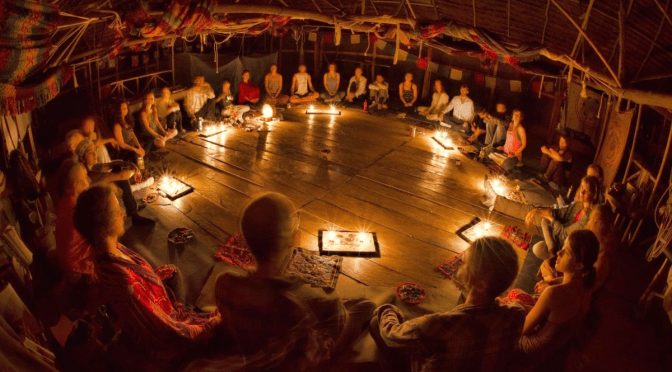
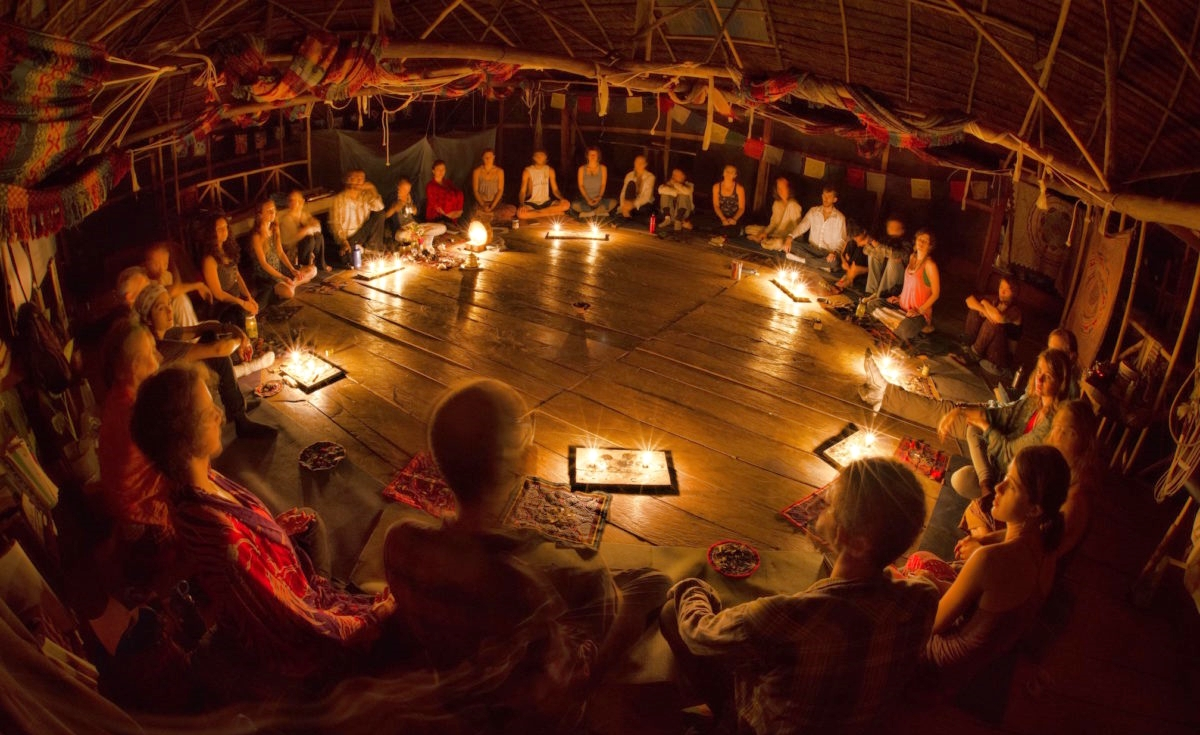
So, can you do Ayahuasca in Peru? Yes, you can. First of all, it is a good idea to eliminate any misconceptions you have about Ayahuasca. Despite the tabloid media and other news, Ayahuasca is not a recreational drug. It is not something to get high and enjoy the moment or a magic pill that will solve your problems. For the indigenous people of the Amazon, Ayahuasca is more than a simple plant, it is a spirit, a sacred and ancestral ritual for healing.

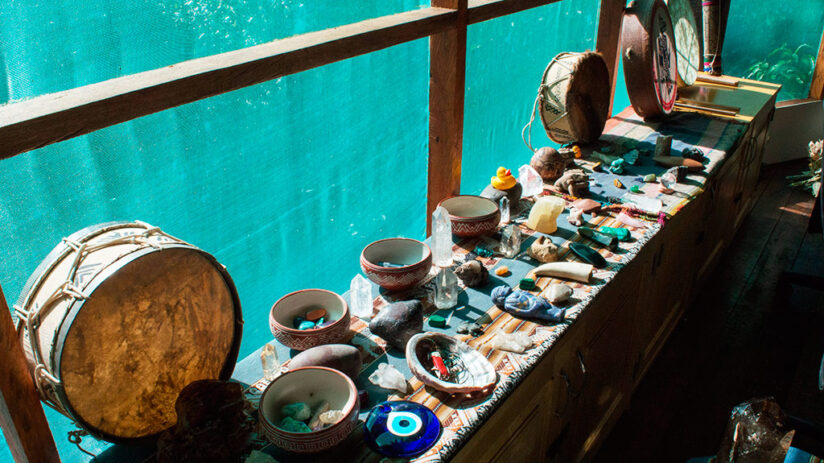
And what exactly is Ayahuasca? It is an infusion made by shamans of the Amazon jungle. It serves to enter altered states of consciousness and obtain new perspectives on life. Historically, it is known that many visited shamans to heal themselves from physical, mental, or emotional reliefs. In general, those who drank from the infusion did so in order to receive guidance from the “spirit” that inhabits the plant. Today, the tradition remains strongly rooted in Ayahuasca ceremonies. And during the last decades, shamans began to serve the infusion to different patients under their supervision.

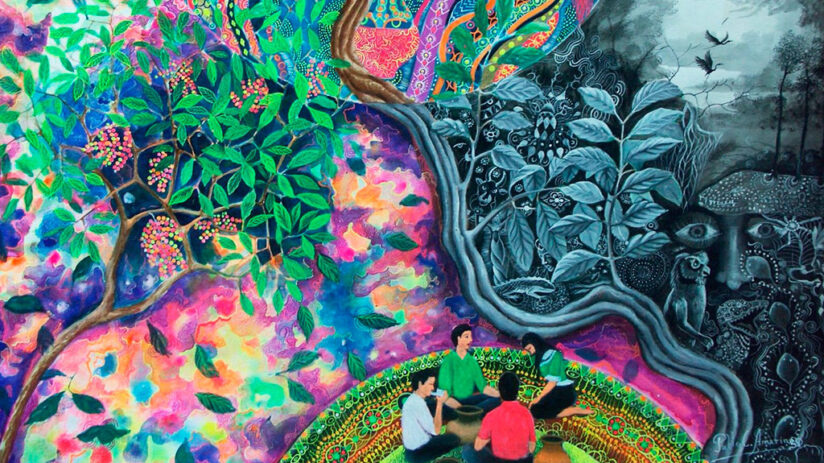
Ayahuasca is a jungle vine that grows in the middle of the jungle. It is commonly found in the territories of Colombia, Peru, Bolivia, Brazil, and the Guyanas. The plant is quite revered by the indigenous tribes as well as the shamans of the Andean regions. It is considered a “Master Plant”. The term Ayahuasca derives from the ancient Quechua language. The Quechua words “Aya” translates to the dead, while “Huasca” translates to vine or rope. That is to say, the “Rope of the Dead” or the “Vine of the Dead”. The concoction has been used for more than 5000 years for both individual and collective healing. If you are looking to visit Machu Picchu, you can enjoy one of these ceremonies.
Despite common belief, preparing Ayahuasca in Peru is quite difficult. Most of those who try it do not have the desired effects or even have bad experiences accompanied by indigestion. Therefore, if you are looking to try the real thing, you have to travel to the Amazon basin and do it with a renowned Shaman. Ayahuasca is made by shamans using the Ayahuasca vine and the Chacruno leaves. Both can be obtained naturally in the middle of the Amazon basin. The Ayahuasca vine naturally contains natural chemical compounds that resemble DMT. While the Chacruno leaves allow their metabolization within the body.

According to tradition, these two plants must be collected on a full moon or in the morning. In addition, whoever picks it up must be fasting. It takes about ten kilos of Ayahuasca to prepare the infusion. For this, the Ayahuasca vine is crushed to make them easier to cook. Then a kilo of Chacruna is added. Depending on the shaman, the concoction can include tobacco and coca leaves.

Note that the preparation is boiled for 12 hours in about 50 liters of water. And while it is being prepared, it is accompanied by shamanic chants known in the Amazon as Icaros. It is also accompanied by tobacco puffs while asking for specific intentions. Both the songs and the intentions are invocations to the spirit of Ayahuasca. The 50 liters of the initial preparation is reduced to only 2 liters of Ayahuasca. The end result is a liquid with a viscous texture and a reddish-ocher color. This is one of the many ways to prepare, but everything will depend on the Shaman and his traditional methods.