Tag Archives: travel to machu picchu

INCA TRAIL TO MACHU PICCHU

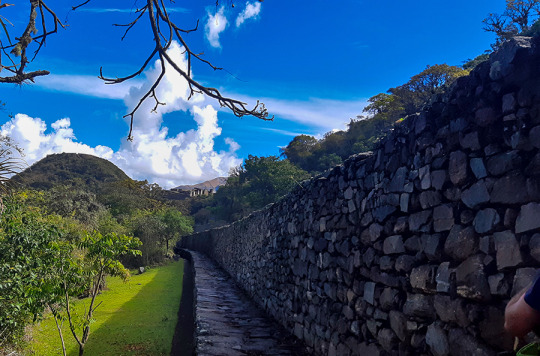
The Incas covered much of the South American continent. To maintain communication in such a vast territory, it was necessary to build a network of roads. Thus, the Inca ordered to build a network of roads called Qhapac Ñan (Inca Trail).
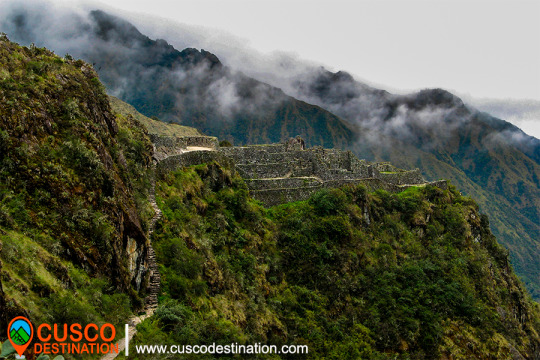
The Qhapac Ñan managed to cover up to 30 thousand kilometers from the current countries of Peru, Ecuador and part of Bolivia, Chile, Argentina and Colombia. The trekking route from the Inca Trail to Machu Picchu is only a small part of the extensive network of roads of the Qhapac Ñan.

The Inca Trail to Machu Picchu
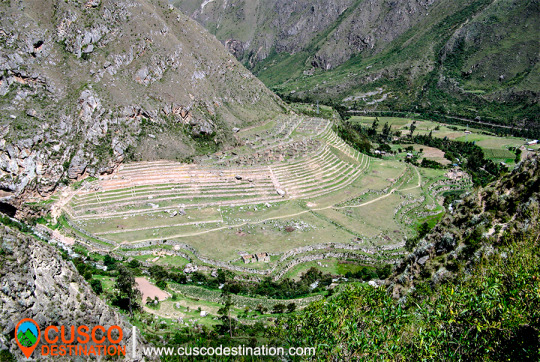
The Inca Trail was revealed to the world in 1915 when it was being excavated in the Inca City. Three decades later, the route was traced by the Viking expedition in 1942. Today, thousands of visitors decide to travel the 43 kilometers to the ‘Puerta del Sol’ in Machu Picchu.

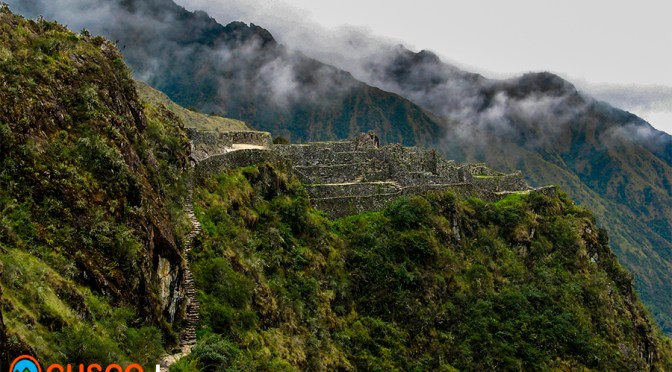
However, Machu Picchu is not the only archaeological site that you will see on the Inca Trail. On the tour you will also appreciate the ruins of Llactapata, the archaeological site of Runkurakay, Saycamarca, Phuyupatamarca and Wiñaywayna.
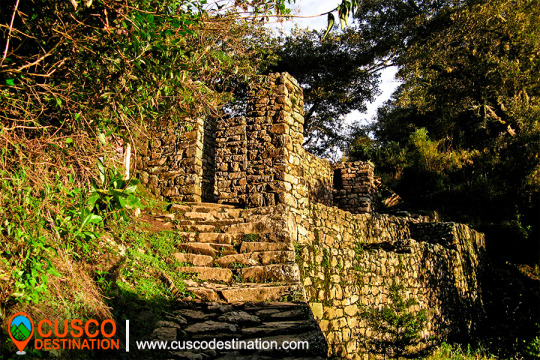
There are trains and buses that can take you directly to Machu Picchu. However, the experience of arriving as the Incas did for centuries is unmatched.

Versions of the Inca Trail to Machu Picchu

Not all people have the days necessary to travel the Inca Trail (4 days and 3 nights). That is why there are 3 versions depending on the time you have:

  1. Classic Inca Trail: 4 days and 3 nights (43 kilometers of walking).
  2. Imperial Inca Trail: 5 days and 4 nights (43 kilometers of walking).
  3. Short Inca Trail: 2 days and 1 night (12 kilometer walk).

About tickets to enter the Inca Trail

Due to the high demand for tickets, you must get the entrance tickets to the Inca Trail well in advance (6 months). The purchase is made only online through the website of an authorized tourism agency.

In total 500 people enter the trails of the Inca Trail every day. Of these, only 200 are tourists. The rest are support staff such as cooks, porters, guides. The ticket to enter the Inca Trail includes support staff.

Did not find availability to do the Inca Trail? 

The only way to enter the Wonder of the World is by train through the Sacred Valley of the Incas or by the alternative route from Santa María to Machu Picchu. Entrance tickets to Machu Picchu must also be reserved in advance.

Do you want to enter the Huayna Picchu after the Inca Trail? Request entry into the agency paying an extra price. You can also request a more luxurious train service.

INFORMATION OF INCA TRAIL TO MACHU PICCHU
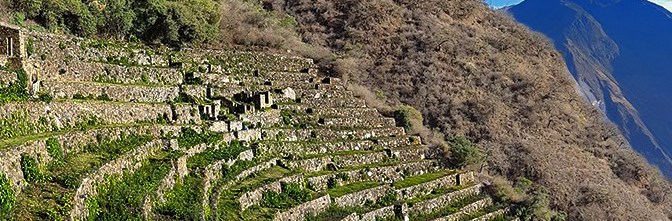
 

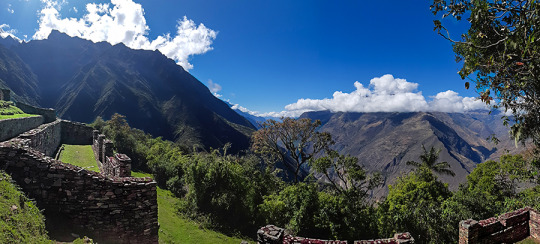
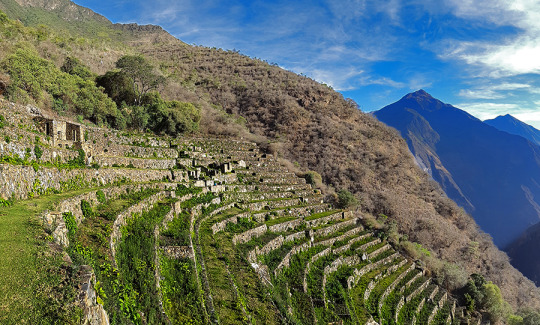
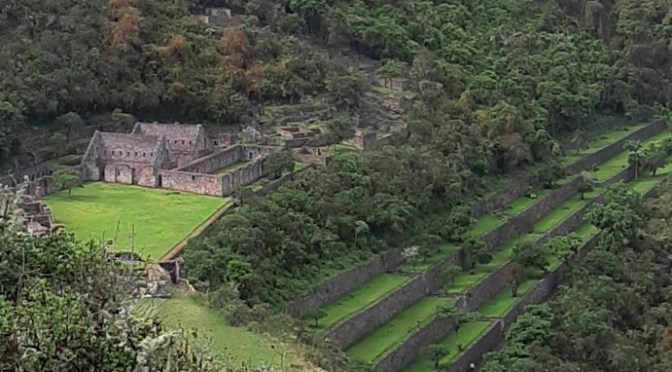
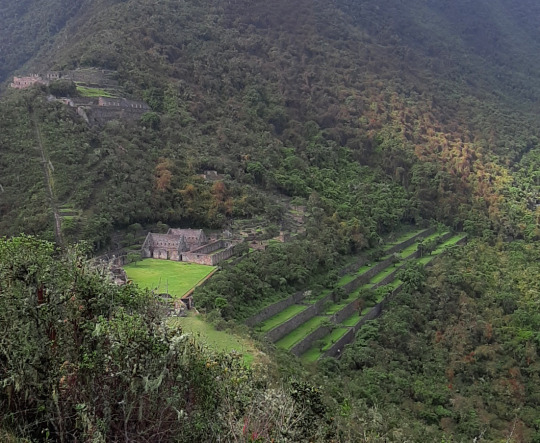
Choquequirao Archaeological Site and its twelve sectors

Sectors of Choquequirao

In sector I, the sector of the plaza and temple, hanan area, located to the north and which is the highest part, there are five floor buildings, located on terraces of different levels. It is possible that they served as the residence of the priests. Higher up, there is another smaller plaza where two warehouse buildings (qolqas) and three other long residential buildings are located.

(kallankas). A wall with a main channel of water collected from the Ch’unchumayo stream also enters here, supplying the archaeological site and descending, like a spinal column, organizing the arrangement of the buildings.

In sector II, hanan zone, there are the deposits or qolqampatas divided into warehouses with internal subdivisions with quincha partitions; in another space, within this subsector, there are small ceremonial platforms (16 platforms), crossed by an alternate channel that takes advantage of the waters of the main channel.

CHOQUEQUIRAO TREK INFORMATION.

Sector III, which appears to be the main square or Hauqaypata, is located between the upper (hanan) and lower (hurin) sectors, on the filling of a platform. On the extreme sides of this square there are buildings with one and two levels. In the north there is a kallanka (building) for ceremonial use — Sunturwasi — with low niches (kind of chapels); To the east are two-story buildings with walls that support gabled roofs. They have two facades, one for entering the main plaza and the other that leads to a patio with side accesses. Access to these buildings is through double jamb covers (a double frame). These buildings are separated by a corridor, which highlights the largest building (kallanka) in the city that goes to the side of the backyard and that leaves through a wall to the south side, which is where the platforms in the north sector are located. of the city or llacta.

Sector IV, located in the Hurin or south zone, is a main construction made up of five covers called by Sartiges “triumphal wall” and by Samanez and Zapata “wall of offerings to the ancestors”. The other four, probably, were for ceremonial use and would correspond to an open temple. Behind these covers is a field, where you enter a second level, which is above the covers.

Sector V is the ushnu: a hill cut at its top that forms a ceremonial oval platform and surrounded by a small wall as a fence, which is entered by an entrance that first rises by steps and from where you can see the main square and hanan site. From this place the snow-capped mountains and the Apurímac river are visible.

Sector VI is the Wasi Cancha, located south of the ushnu in the lower part; It is also known as a temple and home of priests. A space of four platforms with zigzag walls is observed, which was used as a ceremonial space. In the first wall it is finished off with a source for water, and the other platforms are accessed with stairs. Below this area of ​​worship you can see a field or space with two enclosures of one and a half floors enclosed by a perimeter wall; from here you can see a good part of the Apurímac river canyon.

Sector VII belongs to the cultivation platforms on the east side. It stands out from the rest, for being wide and wide platforms. It can be entered through walkways from the main square.

The discovery was made in September 2004 within the framework of the «Cadastre and Delimitation (…)
Sector VIII is an area of ​​cultivation platforms, located on the west side, with eighty platforms, divided into plots and water channels that descend from the main square. Here were the famous “Llamas del Sol”

The ceramic remains show a multi-ethnic presence of the llacta (even though there has been int (…)
Sector IX is made up of popular houses, also called Pikiwasi, and is where one of the water channels ends. The houses seem to have been for collective and family use, built on artificial platforms, rectangular, square and circular in design, communicating by means of stairs and narrow passageways.

Sector X is made up of the cultivation platforms, the Paraqtepata, made up of 18 platforms and irrigation channels parallel to the stairs.
Sector XI also has cultivation platforms, the Phaqchayoq, made up of 80 wide platforms, the largest of the entire complex and located on the right bank of the Ch’unchumayo stream. There are also small quadrilateral enclosures in the middle of the plots with two-level enclosures, both for ceremonial use and for housing, with three sources for water and irrigation channels.
Sector XII presents cultivation platforms three hours away from Hanan Square, and is made up of 57 platforms with permanent irrigation. In the upper part there are buildings for ceremonial use that occupy the entire width of the platform, a spring pool, a semicircular enclosure where ceramic remains, stone tools and bone remains were found.

MORE INFORMATION OF CHOQUEQUIRAO TREK


Choquequirao archaeological complex – Cusco – Peru

It is an Inca urban construction, which archaeological studies may be better specifying in the future, as its architectural structure and functions are analyzed. Only archaeologists will determine if there is material evidence with greater antiquity in the same location.56 In a general sense, the Andean populated centers especially Inca also called liadas, are characterized by being fixed according to a distribution pattern: square; a number of large, elongated and rectangular buildings called kallankas; deposits or collqas; platforms or ushnu cradle in their squares for the cult of the Sun and probably to carry the agricultural calendar with more precision (Thompson 1972: 78; cf. also Ayme Carrasco 2003: 237-38, 250-53). According to ethnohistorians, these populated centers followed the model of the city of Cusco, where the ritual and ceremonial spaces had the solar temple, royal apartments and, what we could call, a civil administrative part: prisons, acllahuasis, warehouses (Espinoza 1997b : 362; cf. also Rostworowski 2004: 173). However, it cannot be asserted that there was a general and constant pattern for all urban settlements, Choquequirao is also a good example of the adaptation in a steep and high terrain of a llacta that conserves the fundamental elements, but adequate to a certain area of construction. INFORMATION OF CHOQUEQUIRAO TREK

The urban layout, as seen by archaeologists, follows the dual Andean pattern. There is a high sector: hanan, and another low part, hurin. In this regard, archaeologists Roberto Samanez and Julinho Zapata point out:

When studying the distribution of functions in Choquequirao, a dual organization is perceived, very widespread, which creates a high sector and another low part or Hurin. It has been established that the High Sector is the one occupied by the buildings in the extreme North, and the Low sector is the one next to the main square where ceremonial buildings are located, the three two-level buildings and the two Kallankas. (Samanez and Zapata 1999: 90)

Choquequirao is built following a north-south axis with a drop of 65 meters in height between the first and second planes. Each plan has three groups of constructions that are distributed following the topographic disposition of the terrain. The central area of ​​the complex, probably ceremonial, is 700 meters long.

MORE INFORMATION OF CHOQUEQUIRAO TREK


All About Salkantay Mountain – Cusco – Peru (part 3)

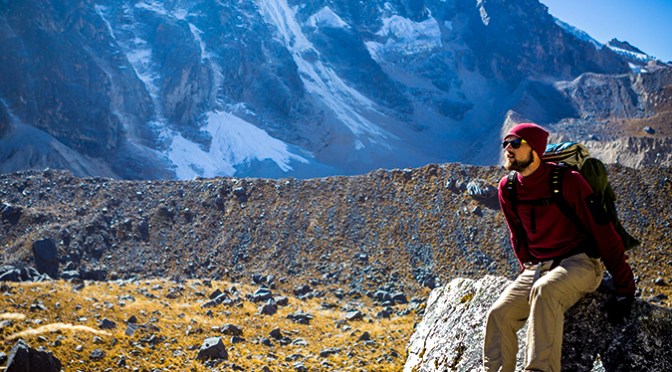
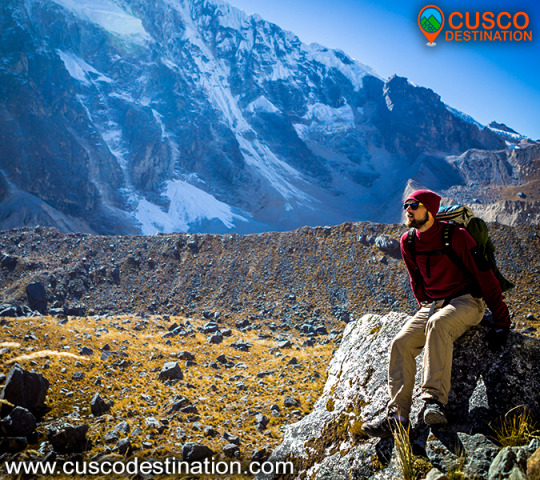
Location of the snowy mountain of Salkantay:

The Salkantay Route, also known as the “New Inca Trail”, is located north of the city of Cusco, following the Cusco – Limatambo – Abancay – Lima road, making a detour between Limatambo and Mollepata.

Salkantay snowy climate:

It is very sunny during the day, but cold at night. The temperature drops below 0 ° C at night during the months of June to September. In the season from December to March it is very rainy so it is not recommended to go on these dates.

The best time to do this trek is during the months of March to September.

Height of the walk to the snowy Salkantay

This hike reaches a height of 4,600 meters above sea level at its highest point is on the slopes of the same snowy Salkantay. Enter Ausangate 5D Snowy Walk to do this little walk.

How to get to the snowy mountain of Salkantay

The buses from Cusco to Mollepata leave very early from 4 am to 5 am and pass through Limatambo, from Mollepata is where the trek to the snowy Salkantay begins, after climbing a step it is possible to have an impressive pyramidal view of Salkantay, one of the mountains most beautiful snowfall of Cusco.

From Mollepata it takes two days to descend to Huayllabamba and join the second day of the Inca Trail.

What you will see along the way

On the way you can see herds of cattle and sheep, orchids, bear with glasses, medicinal plants of the Inca eponca, small variety of birds, fruit trees such as orange, papaya, bananas, and so on.

Note: The eye of the glasses to see it is necessary to have some luck.

recommendations

It is very important for the traveler. Bring your original passport for the respective controls.

RECOMMENDED MONTHS TO TRAVEL

March: (a little rain)
From April to October: (an excellent trip)
From October to November: (a little rain)
December to February: (lots of rain)

SALKANTAY TREK INFORMATION